
Short sleep is widespread. The CDC estimates that roughly one in three U.S. adults regularly gets less than the recommended 7 hours per night, and many are looking for safe, non-pharmaceutical options to improve rest. (CDC: Adults Sleep Statistics)
Preliminary research suggests hydrogen water may modestly support sleep quality by reducing oxidative stress at the cellular level. The mechanism is not sedation — it is cellular. Molecular hydrogen (H₂) acts as a selective antioxidant, which may help the body manage the oxidative load that interferes with restful sleep. Evidence so far is early-stage, mostly from animal studies and small human trials.
This article covers what current research actually shows, optimal timing for sleep-focused use (30–60 minutes before bed), who is most likely to benefit, and who should skip it. We will also address practical concerns — volume, hydrogen escape, and realistic expectations.
Can You Drink Hydrogen Water Before Bed?
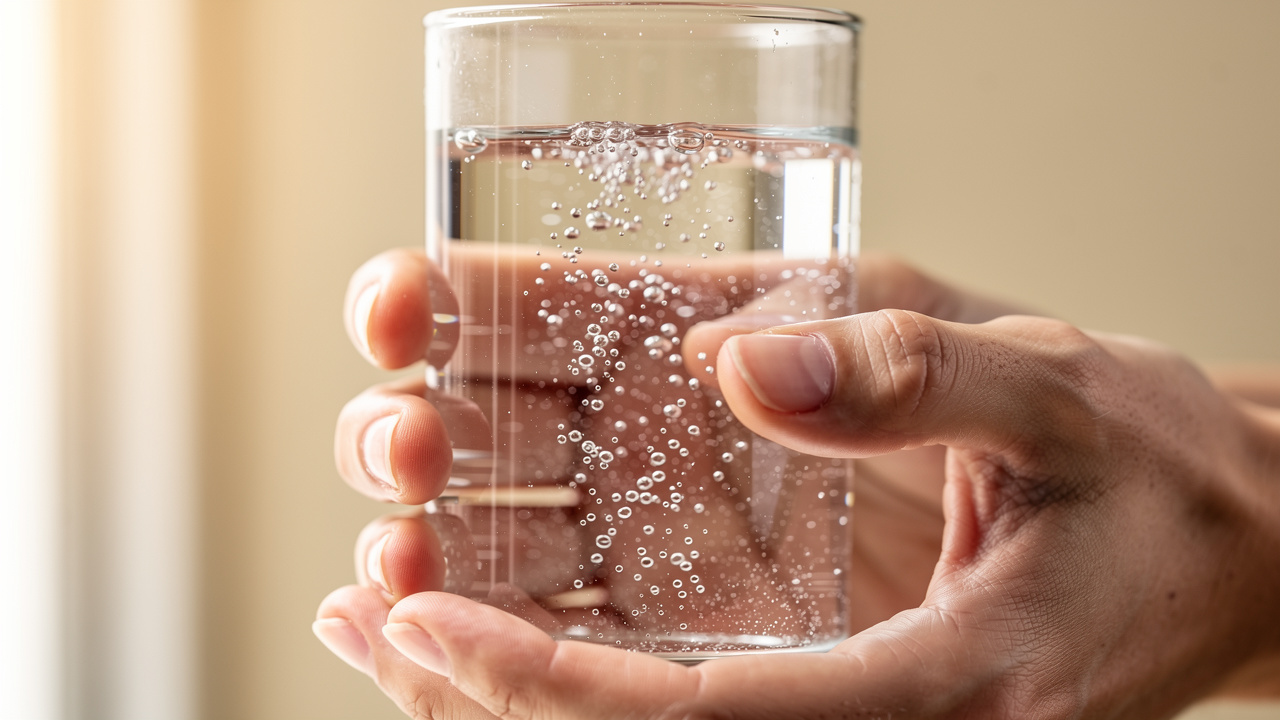
Yes, hydrogen water is safe to drink before bed for most healthy adults. It is the same water you would drink anyway, with dissolved molecular hydrogen gas (H₂) added. The hydrogen itself is non-toxic and is rapidly cleared by the body through respiration.
The main practical concern is not the hydrogen — it is volume. Drinking large amounts of any liquid right before bed increases the likelihood you will wake up to urinate, which defeats the purpose of trying to improve sleep consolidation. A reasonable approach is 8–10 ounces consumed 30–60 minutes before lying down. That gives your body time to process the fluid without leaving you with a full bladder at bedtime.
People with diagnosed conditions affecting fluid balance or urination frequency should consult their physician about pre-bed fluid intake of any kind. This includes individuals with:
- Benign prostatic hyperplasia (BPH)
- Interstitial cystitis
- Congestive heart failure
- Other conditions where added evening hydration could worsen symptoms
One practical consideration with hydrogen water is timing after preparation. Molecular hydrogen is the lightest molecule in existence and escapes from water rapidly once exposed to air. To preserve a meaningful hydrogen concentration, consume the water within 10–15 minutes of generation or opening a sealed container. This is not a safety concern — it is an effectiveness one. Wait too long and you are simply drinking regular water.
For more on the safety profile, see the hydrogen water safety profile.
What Does Research Actually Show About Hydrogen Water and Sleep?
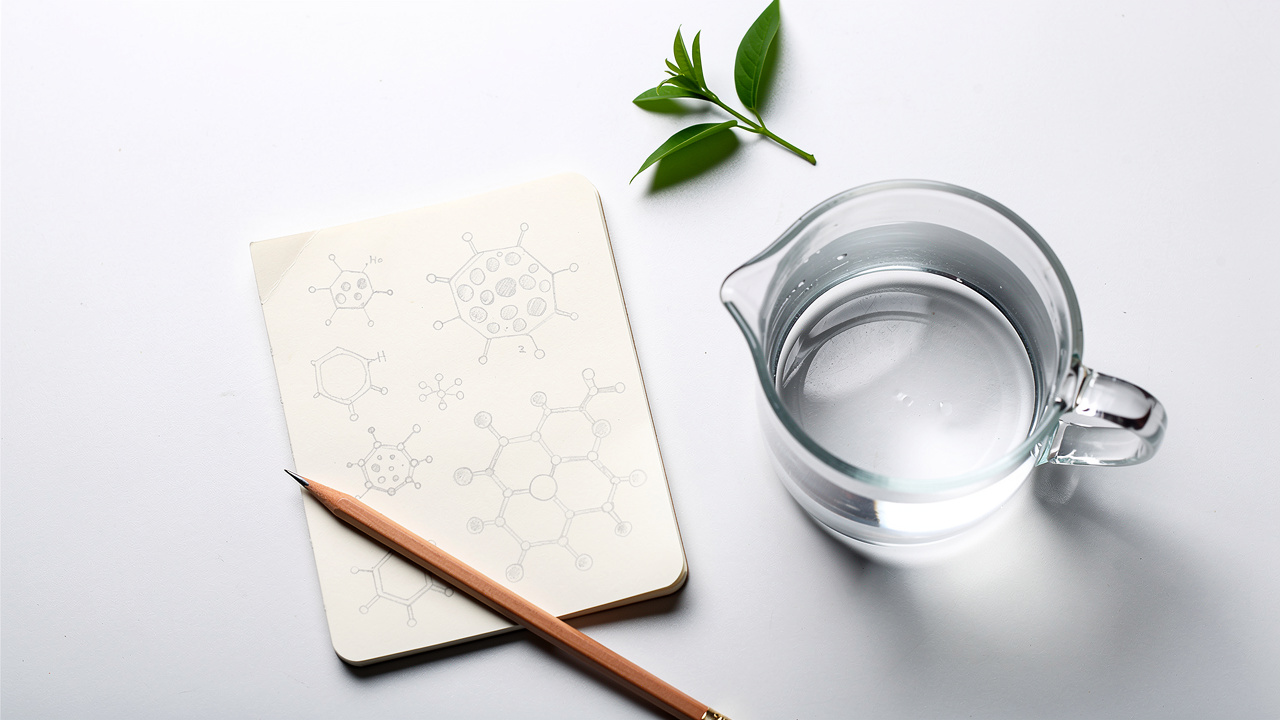
Direct evidence on hydrogen water and sleep is preliminary. Most data comes from animal studies and small human trials. Rigorous, large-scale, placebo-controlled human studies on sleep specifically are limited. That does not mean the research is worthless — it means expectations should be calibrated accordingly. This is Tier D evidence: research-based synthesis, not lab-tested or hands-on.
The mechanistic basis is plausible. Molecular hydrogen acts as a selective scavenger of certain reactive oxygen species, including hydroxyl radicals — among the most reactive free radicals in biological systems. The antioxidant property has been studied extensively in inflammation and oxidative-stress contexts. Whether this cellular-level effect produces measurable sleep improvement in healthy humans is the open question.
Animal studies have produced promising preliminary signals. Some rodent studies have observed shorter sleep onset and reduced fragmentation when hydrogen-rich water is consumed, though sample sizes have generally been small. Animal-to-human translation in sleep research is also notoriously uncertain — rodents are nocturnal, their sleep architecture differs from ours, and lab conditions do not replicate real-world human use.
Small human studies have reported subjective improvements. Trials in stressed populations and shift workers have suggested better self-reported sleep quality and daytime alertness after several weeks of hydrogen water consumption. The challenge is that many of these studies share three weaknesses:
- Small sample sizes (often fewer than 50 participants)
- Limited or no placebo controls
- Reliance on self-reported outcomes rather than objective polysomnography
In context, hydrogen water benefits remain preliminary relative to established sleep interventions. Approaches with stronger evidence — consistent sleep schedules, regular exercise, limited evening alcohol, and managing late-day caffeine — show larger effect sizes in clinical trials.
The bottom line: the mechanism by which hydrogen water might support sleep is biologically plausible. Early data is interesting enough to warrant attention. The evidence level currently sits below established sleep interventions. Hydrogen water is not a substitute for sleep hygiene basics — consistent bedtime, a dark cool room, limited evening screens, and stress management remain the foundation of good sleep.
For more on the underlying science, see the molecular hydrogen evidence base. If you are concerned about potential risks, review the side effects of hydrogen water.
When Should You Drink It If Sleep Is the Goal?
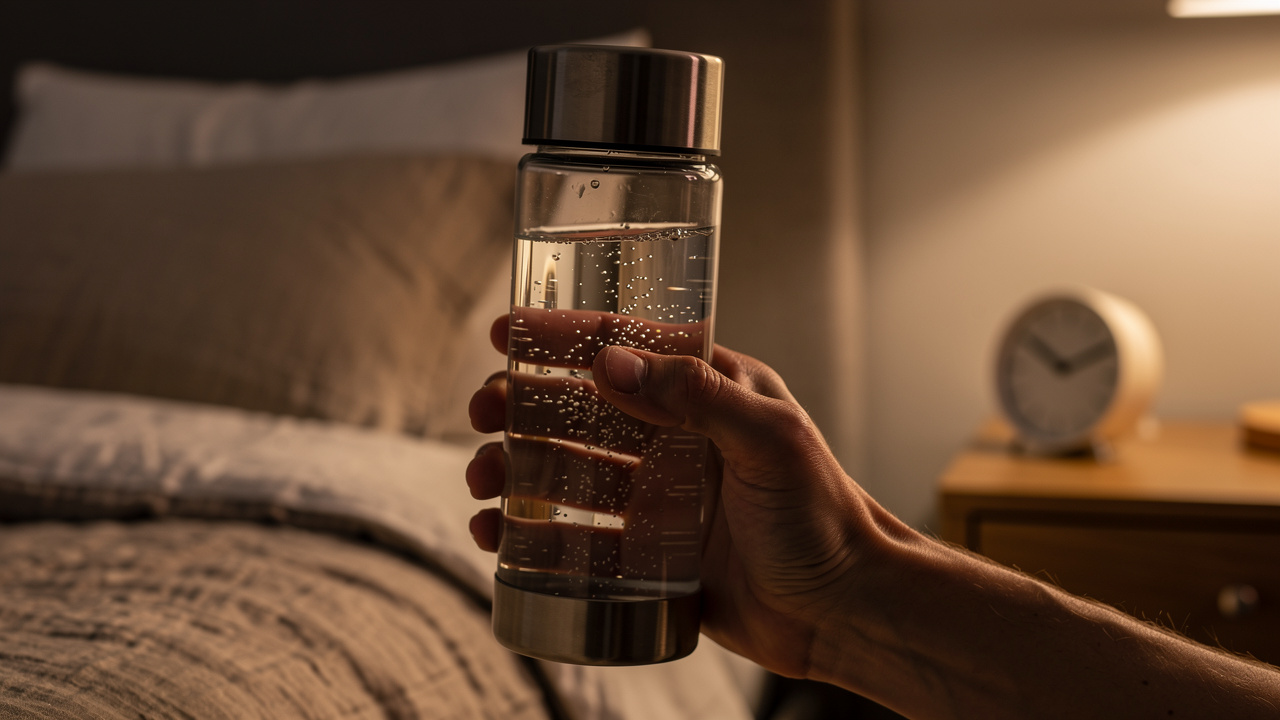
Timing matters when the goal is sleep support. The recommended window is 30–60 minutes before lying down. That allows the molecular hydrogen to be absorbed without leaving you with a full bladder that disrupts sleep later.
Volume guidance is straightforward: 8–10 ounces is generally sufficient. More is not better. Hydrogen saturation in water is determined by physics — once water reaches its maximum dissolved H₂ concentration at a given temperature and pressure, drinking more volume does not proportionally increase your hydrogen intake. It just adds fluid, which raises nighttime urination risk without proportional benefit.
The rapid escape of hydrogen is a practical consideration. H₂ is the lightest molecule and diffuses out of water quickly once exposed to air. If you are using a hydrogen generator bottle or opening a sealed pouch, consume it within 10–15 minutes. Waiting longer means you are essentially drinking regular water — not dangerous, just ineffective for the purpose intended.
Morning consumption is also valid if your goal is not sleep-specific. For general antioxidant support, athletic recovery, or inflammation management, morning intake works fine. The “before bed” framing is specifically for people targeting sleep through the oxidative-stress-reduction pathway.
Combine hydrogen water with sleep hygiene fundamentals, not as a replacement. No supplement compensates for inconsistent bedtimes, bright screens before bed, or a warm bedroom. Treat hydrogen water as a potential marginal addition on top of a solid foundation, not a shortcut around basic practices.
Avoid sweetened, flavored, or “energy” hydrogen water products marketed for nighttime use. Added stimulants (even small amounts of caffeine), sugars, or high electrolyte loads can disrupt sleep regardless of hydrogen content. Plain hydrogen water is what research has examined.
Who Benefits Most — and Who Should Skip
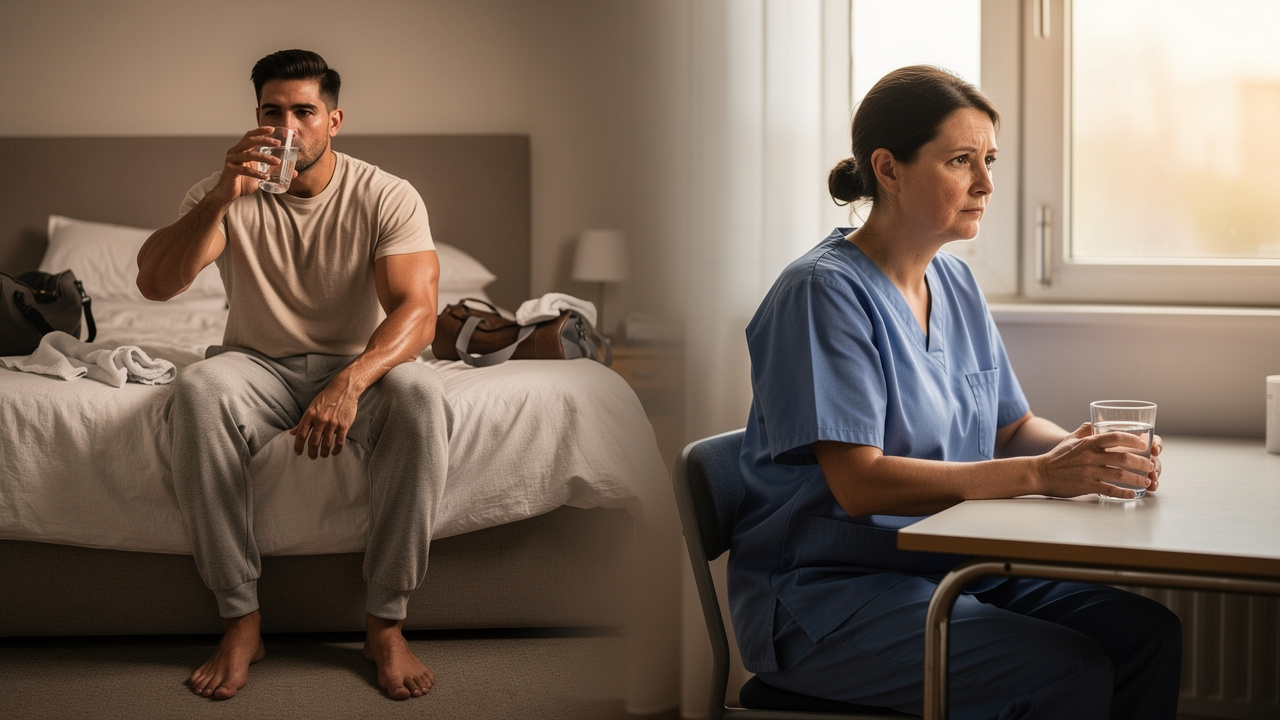
Not everyone needs hydrogen water for sleep, and some people should avoid adding pre-bed fluid altogether.
Who may benefit
- People with fragmented sleep or frequent nighttime awakenings looking for non-stimulant supportive options. If you fall asleep fine but wake multiple times, the sleep-consolidation effects observed in early studies may be relevant.
- Shift workers managing irregular sleep schedules and the oxidative stress that comes with circadian disruption. The cellular-stress-reduction mechanism may help the body adapt to non-standard sleep windows.
- Athletes in high-volume training blocks. Intense exertion generates substantial free-radical activity. The cellular-stress-reduction mechanism may be relevant during heavy training periods, an indirect sleep benefit through better physical recovery.
- People who already drink water before bed and want to substitute hydrogen-rich water with marginal added effect. If evening hydration is part of your routine and does not cause bathroom trips, swapping in hydrogen water is low-risk.
- Anyone willing to treat it as a low-cost-to-try experiment. If you understand the evidence is preliminary and you are comfortable testing it on yourself, the downside is minimal.
Who should skip
- Anyone expecting a sedative. Hydrogen water is not melatonin, magnesium, or a GABA agonist. It does not make you drowsy. If you need something that induces sleepiness, this is not it.
- People with already-good sleep. If you fall asleep in 10 minutes and stay asleep through the night, the upside is small. Allocate time and money elsewhere.
- Anyone with a diagnosed sleep disorder like insomnia disorder, obstructive sleep apnea, or restless legs syndrome. These require evaluation and treatment by a sleep specialist. Do not self-treat with supplements.
- People on prescribed sleep medications. Do not discontinue or modify prescribed medication based on a supplement decision. Discuss any changes with the prescribing physician.
- Anyone with frequent nighttime urination concerns. If you have BPH, interstitial cystitis, or other conditions causing urinary frequency, added pre-bed fluid worsens the problem regardless of what is dissolved in the water.
- Budget-constrained shoppers. Proven sleep interventions — consistent schedule, dark room, exercise, limited alcohol — are free and have stronger evidence. Allocate resources there first.
For medical guidance on any sleep concern, consult a healthcare provider.
The Bottom Line
Hydrogen water before bed is safe for healthy adults in normal serving sizes (8–10 ounces). The current evidence is preliminary, not conclusive. Animal studies and small human trials suggest possible sleep-quality effects through oxidative-stress reduction, but rigorous large-scale human trials with placebo controls are limited.
If you decide to try it, follow these parameters: 8–10 ounces, 30–60 minutes before bed, consumed within minutes of generation or opening, with realistic expectations — subtle effects, not sedation. Hydrogen water operates through cellular mechanisms. Any benefit builds with consistent use, not on a single serving.
This is not a replacement for sleep hygiene basics or for prescribed treatment of diagnosed sleep disorders. If you have insomnia disorder, sleep apnea, or another clinical condition, see a sleep specialist. Supplements do not substitute for medical care.
Choose products that publish independent third-party verification of H₂ concentration. Most marketed hydrogen water devices do not deliver the concentrations claimed on packaging. Without verified data, you are likely paying for regular water.
For product comparison and tested concentration data, see the verified hydrogen water bottle comparison.
Frequently Asked Questions
Is hydrogen water safe to drink every night?
Yes, hydrogen water is safe to drink every night for most healthy adults. The hydrogen itself is non-toxic and is rapidly cleared by the body through respiration. The main practical limit is fluid volume affecting nighttime urination, not the hydrogen content. People with diagnosed conditions affecting fluid balance or urination frequency should consult their physician about pre-bed fluid intake of any kind. For more, see the hydrogen water safety profile.
How much hydrogen water should I drink before bed?
Eight to ten ounces is generally sufficient. Concentration matters more than volume — hydrogen saturation in water is fixed by physics, so drinking more does not proportionally increase your hydrogen intake. It just adds fluid volume, which increases the risk of waking up to urinate without proportional benefit. Use a high-quality generation device to ensure adequate H₂ concentration in a smaller serving.
Does hydrogen water work immediately for sleep?
No. Hydrogen water is not a sedative — it does not produce drowsiness or immediate sleepiness. Any sleep-quality effect, if present, operates through cellular mechanisms like oxidative-stress reduction and would build with consistent use, not on the first sip. Expect subtle improvements in sleep consolidation over time, not instant knockout effects.
Can hydrogen water replace my sleep medication?
No. Do not stop or modify prescribed sleep medication based on a supplement decision. Hydrogen water has not been studied as a pharmaceutical replacement, and stopping prescribed medication abruptly can be dangerous, particularly with sleep medications that require gradual dose reduction. If you want to explore alternatives to your current medication, discuss changes with the prescribing physician in a supervised plan.