
How Hydrogen Water Bottles Work: Electrolysis and PEM Explained
Disclosure: As an Amazon Associate, Hydrogen Water Safety earns from qualifying purchases. Some linked HWS guides contain affiliate links. Manufacturer-source links below are editorial references.
Sources checked November 8, 2026. Research-based explanation. No original laboratory measurements were performed for this article. See how we evaluate hydrogen water devices.
How hydrogen water bottles work
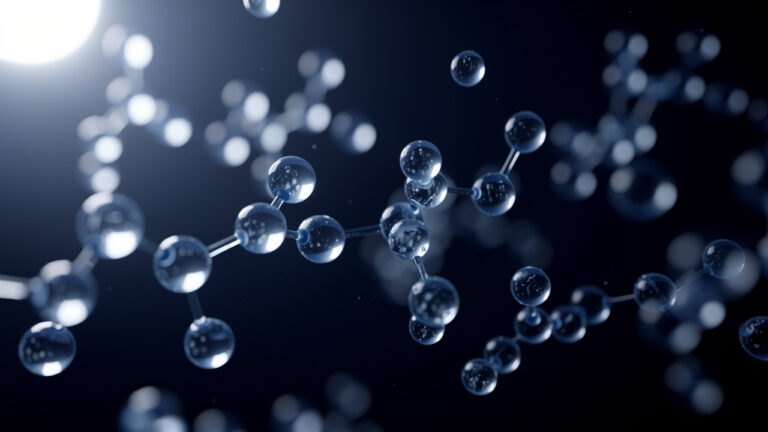
An electrolysis bottle uses electricity to generate hydrogen gas, some of which dissolves in the drinking water. In a PEM design, a polymer electrolyte separates the cell’s reactions while conducting hydrogen ions. The actual consumer device must also manage gases, materials, electrical power and operating pressure. A membrane label or visible bubbles cannot establish a measured concentration or safe output.
Electrolysis in three parts
The U.S. Department of Energy’s electrolysis explanation describes the general PEM process. Its industrial operating conditions are not instructions for a drinking-water bottle.
| Part | General PEM role |
|---|---|
| Anode | Water is oxidized, producing oxygen, hydrogen ions and electrons. |
| Membrane and external circuit | Hydrogen ions move through the electrolyte; electrons travel through the external circuit. |
| Cathode | Hydrogen ions combine with electrons to form hydrogen gas. |
The overall ideal reaction is 2H₂O → 2H₂ + O₂. A manufacturer still needs to explain how its particular device supplies water to the cell, separates gas paths and transfers hydrogen into the drink. Different electrolyzer architectures should not be treated as identical consumer products.
What SPE and PEM do—and do not prove
SPE refers to a solid polymer electrolyte; PEM refers to a proton-exchange membrane in this context. Sellers sometimes use the terms together. The terminology points to an electrochemical design, not a certification of an individual unit. Ask for the exact model and documentation rather than treating the acronym as a safety result.
A real separator can help keep reaction streams apart. Its performance depends on the complete design, assembly, condition and use. It is too strong to say that the label guarantees only hydrogen enters drinking water or that an unverified vent prevents every byproduct problem.
Bubbles, PPM and actual dissolved hydrogen
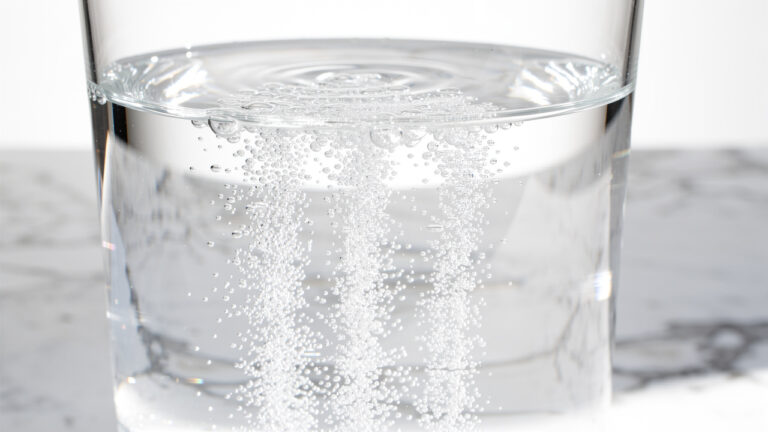
Visible gas generation does not tell you how much hydrogen is dissolved. PPM and ppb are concentration units: 1 ppm equals 1,000 ppb. Timing, temperature, pressure, water preparation and the measurement method are needed to compare results.
At 25°C, NIST’s data imply roughly 1.6 mg/L at 1 bar hydrogen partial pressure, rather than ordinary-air equilibrium. Different pressure or temporary supersaturation can change concentrations; the reference alone does not verify product output.
An oxidation-reduction-potential reading, display number or bubble cloud should not be substituted for an appropriately validated dissolved-hydrogen measurement. When reading a report, check the instrument and method, exact model, sample handling and repeatability. Our evaluation method explains HWS’s evidence limits.
Vents and byproducts: use the correct exposure evidence
A separate gas path is a relevant design feature. A hole, smell or absence of an odor is not an analytical test. Byproduct formation depends on cell design, electrode chemistry, feed water and operation; it should not be assumed identical across devices. Do not deliberately sniff exhaust to test a bottle.
The EPA ambient-air ozone standard concerns ozone in outdoor air. It is not a limit for dissolved ozone in drinking water. Comparing a water-output number with that air standard would mix exposure media and units. Our ozone guide should be read with the same distinction.
Does the bottle filter water?
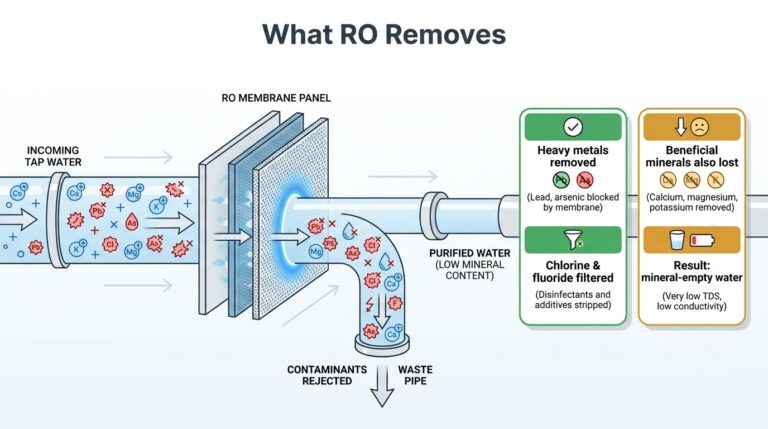
Generating hydrogen and removing contaminants are separate functions. A device needs relevant evidence for a filtration or purification claim. Do not assume that electrolysis makes an unsuitable water source drinkable. Start with water that meets the instructions for the exact consumer device.
Water, cleaning and everyday use
- Follow the supplied manual for permitted water sources, fill level and cycle. Do not add salt, cleaners or other ingredients to improve output unless the manual explicitly permits the specific use.
- Keep gas paths, seals and charging components as directed. Stop use if the device is damaged or behaves abnormally and seek manufacturer guidance.
- Use the exact cleaning agent and procedure the manufacturer permits; there is no universal descaling recipe for every membrane or housing.
- Do not heat, pressurize or alter the cell to chase a larger PPM reading.
See bottle care and hydrogen retention for the distinct maintenance and storage questions. Neither a longer cycle nor a higher advertised output automatically makes a better purchase.
What to ask before buying
| Ask for | What it can help establish |
|---|---|
| Exact model and manual | Whether the operating instructions match the product offered. |
| A dated analytical report | The measured sample, conditions, method and scope. |
| Gas-path and material documentation | How the design addresses the drinking side and byproducts. |
| Conformity documents and support terms | Applicable electrical/product requirements, service and recovery options. |
Use the bottle buying guide to compare documents and practical features. A seller’s label, an analytical test and a clinical study are different kinds of evidence.
Frequently asked questions
Does a bubble cloud prove hydrogen concentration?
No. Gas generation and dissolved concentration are different observations.
Does a PEM label guarantee safe water?
No. The complete design, materials, condition, use and relevant test scope still matter.
Should you use an air-quality ozone limit for drinking-water output?
No. It is a different exposure medium; a meaningful assessment needs the correct method, units and exposure context.
Can every bottle use distilled or tap water?
Do not generalize. Follow the manual for the exact model; technologies and construction differ.
Takeaway
The useful sequence is to understand the cell, inspect model-specific documentation, compare measurements under matching conditions and follow the manual. A large output number and familiar acronym are starting questions, not completed proof.
Sources and review limits
- Department of Energy — general electrolysis mechanism, not consumer operating temperatures.
- NIST hydrogen data — temperature/partial-pressure reference.
- EPA NAAQS — ambient-air standard; not a dissolved-water threshold.