Can You Use Reverse Osmosis Water in a Hydrogen Water Bottle?
Reverse osmosis (RO) water is one of the cleanest options for daily drinking — but the moment you pour it into a hydrogen water bottle, output often drops. If your generator seems weaker or slower to cycle on RO water, that behavior is expected, and it is fixable.
Yes, you can use reverse osmosis water in a hydrogen water bottle — it will not harm a quality device. The catch is efficiency: RO water has very low total dissolved solids (TDS), so it conducts less current during electrolysis and produces less hydrogen per cycle. The fix is simple — add a small amount of food-grade mineral salts before generating, in this order: purify, remineralize, then generate. Never run finished hydrogen water back through the RO membrane.
This guide explains why RO water underperforms in hydrogen generators, the remineralization step that closes most of the gap, and how common water types rank for hydrogen output. It is based on established water chemistry, not device-specific lab testing. If you are still choosing a device, our hydrogen water bottle comparison and hydrogen water machine guide compare models by their published specifications.
What Is Reverse Osmosis Water, and Why Does Mineral Loss Matter?
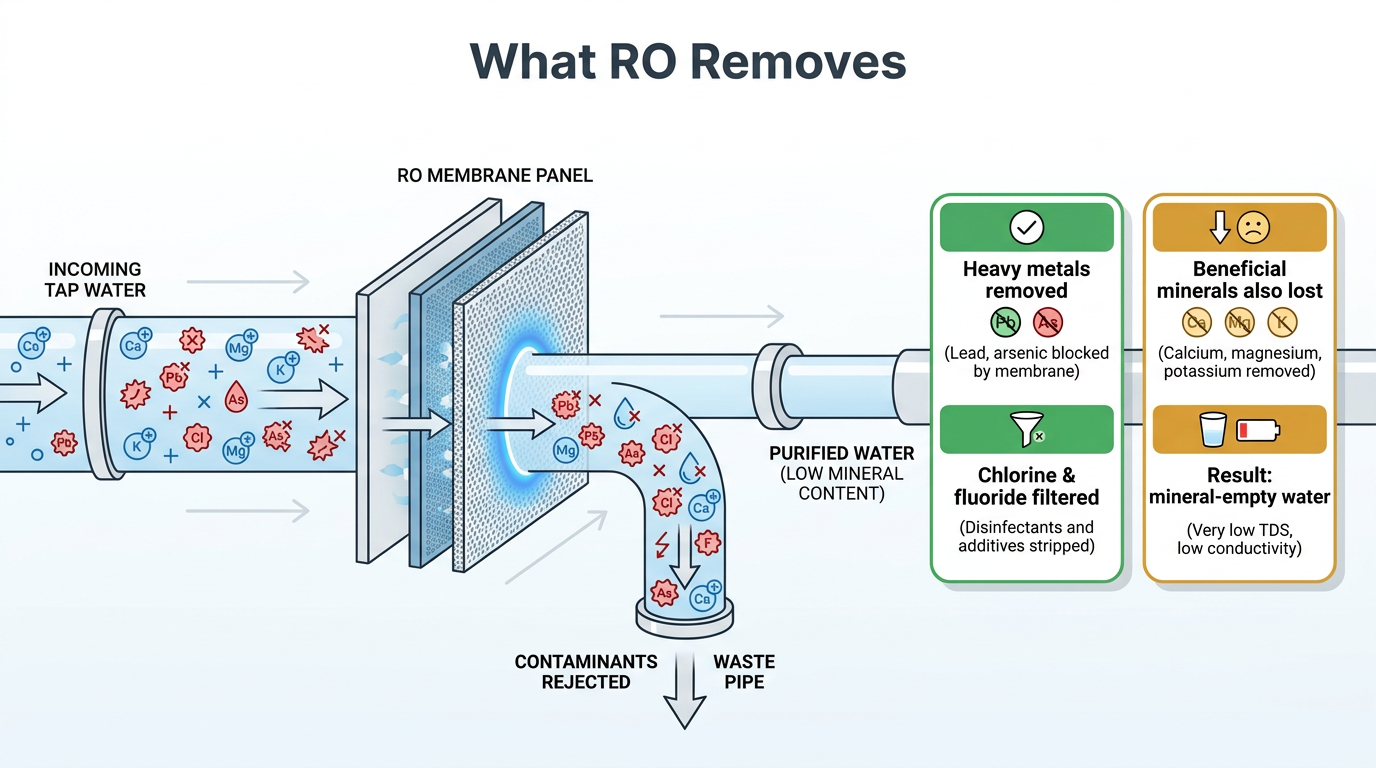
Reverse osmosis water is produced by forcing tap or well water through a semi-permeable membrane under pressure. That membrane blocks the vast majority of dissolved substances — heavy metals, chlorine, fluoride, pesticide residues, bacteria, and dissolved gases — leaving water that is exceptionally clean by almost any measure.
The trade-off is that an RO membrane does not distinguish between harmful contaminants and beneficial minerals. Magnesium, calcium, and potassium are filtered out alongside lead and arsenic. What remains is clean, safe water that has been stripped of the ions that give water its natural electrical conductivity.
That last point matters more than most people realize. Electrical conductivity in water depends on dissolved ions: when ions are present, they carry current through the liquid; when they are largely absent, as in RO or distilled water, the water resists current flow. That creates a direct tension with how hydrogen water generators work, because electrolysis needs current to pass through the water to split molecules and dissolve H₂ gas.
Mineral loss also has a health dimension worth knowing. A WHO-commissioned review, Nutrients in Drinking Water, examined the long-term consumption of demineralized water and recommended a minimum mineral content for drinking supplies — one reason many RO users add minerals back rather than drinking straight RO output day after day.
How Electrolysis Depends on Water’s Mineral Content
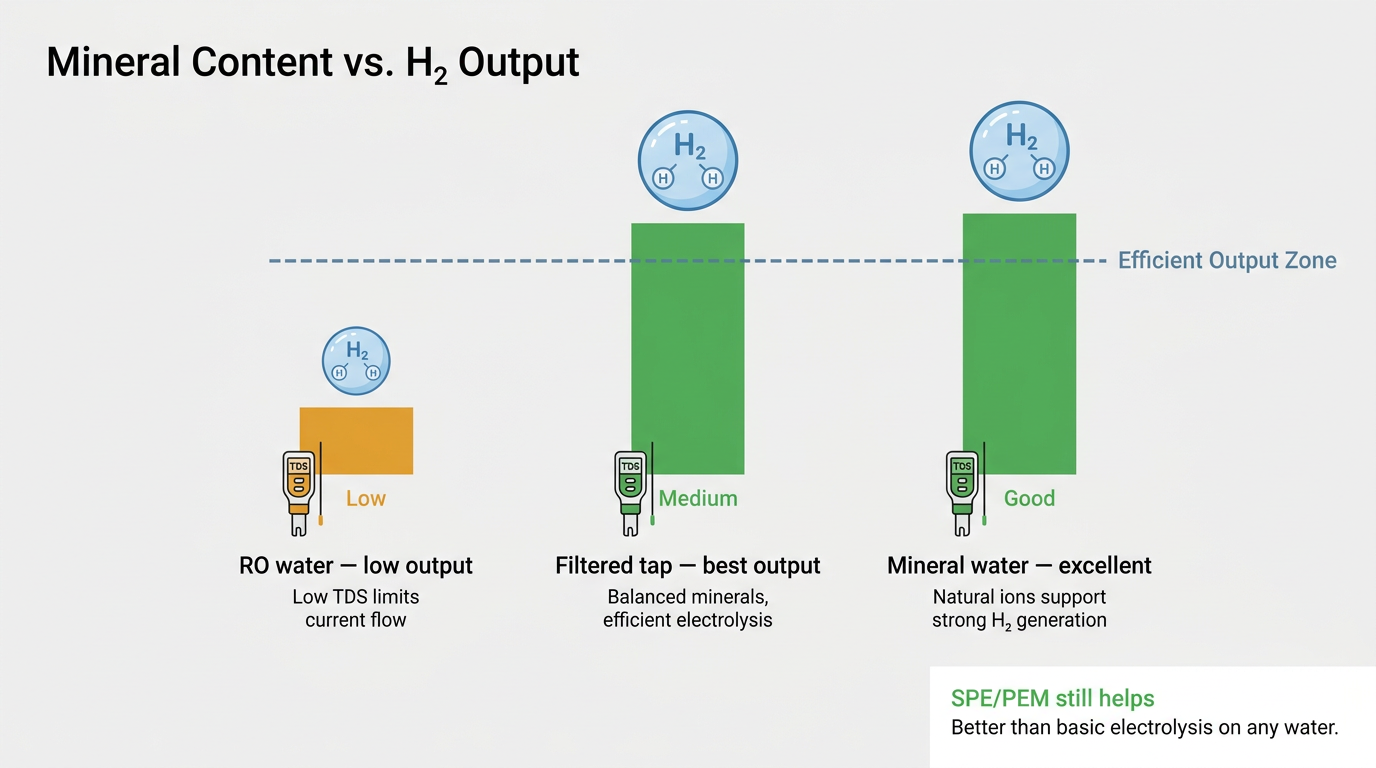
Hydrogen water generators work through electrolysis — an electrical process that separates water molecules at two electrodes, producing hydrogen gas at one side and oxygen at the other. For that process to run efficiently, the water needs enough dissolved ions to carry current between the electrodes. With very low-mineral water there are simply fewer ions available, so less current flows and less hydrogen is produced per cycle.
Quality hydrogen generators use SPE/PEM (Solid Polymer Electrolyte / Proton Exchange Membrane) technology, which handles a wider range of water types than basic electrolysis plates. SPE/PEM designs embed the electrolyte directly in the membrane rather than relying on the water alone to carry the conductivity load. That is why a good SPE/PEM device can still generate some hydrogen with RO or distilled water — it is not completely blocked. Even so, as a matter of basic electrochemistry, output improves when the source water carries some baseline mineral content.
This is also why device guidance across the category generally favors filtered tap or mineral water over straight RO or distilled water: more available ions, more consistent output. For the underlying research on molecular hydrogen itself, see the hydrogen water science overview, and for how membrane quality separates strong devices from weak ones, the best hydrogen water generators comparison covers SPE/PEM standards in detail.
The Fix: How to Remineralize RO Water for Hydrogen Generation
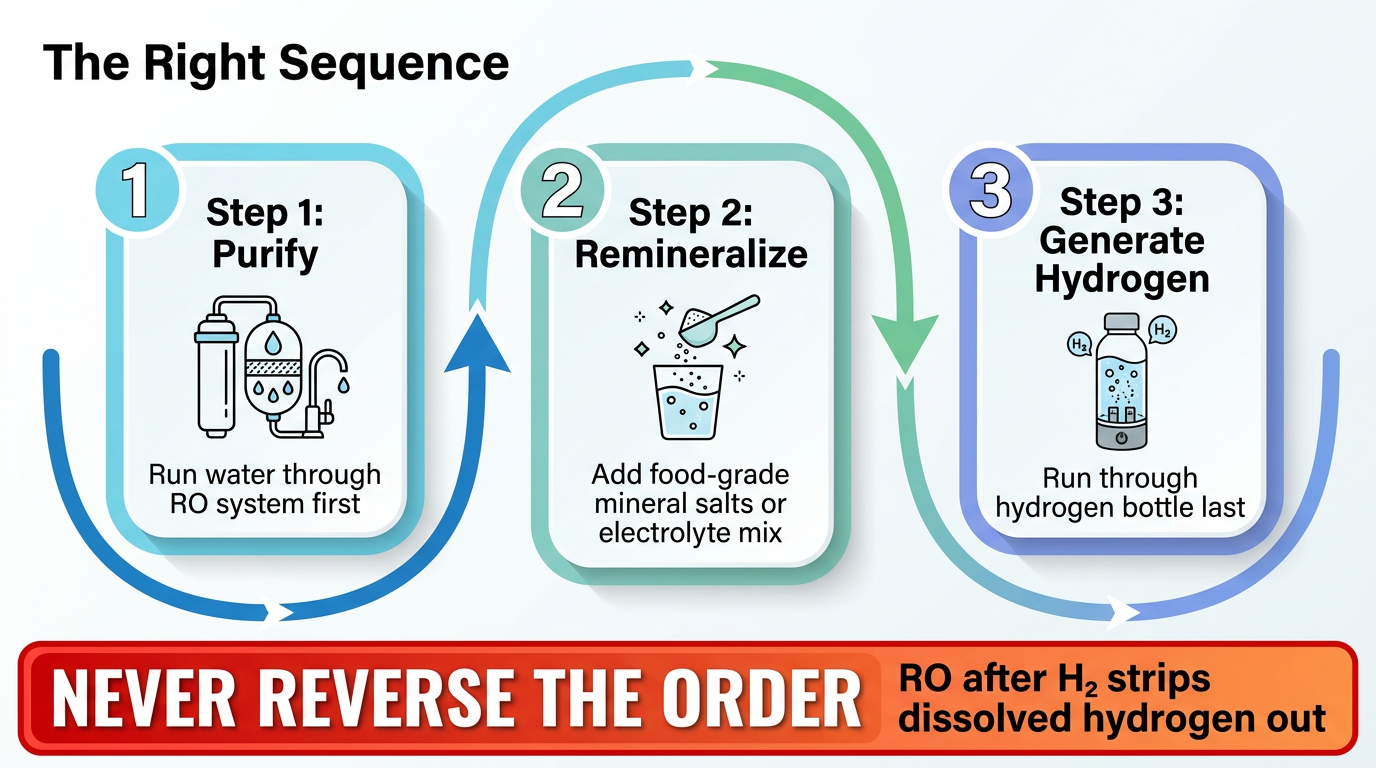
The way to remineralize reverse osmosis water for hydrogen generation is straightforward: add a small amount of food-grade mineral salts to the water before running it through your generator. A pinch of magnesium-based electrolyte powder, or a balanced food-grade electrolyte mix, restores enough dissolved ions to support efficient electrolysis — without reintroducing the chlorine, heavy metals, or contaminants the RO system just removed. You are rebuilding the ionic bridge that RO stripped out, using clean, controlled ingredients rather than unfiltered tap water.
The sequence matters:
- Purify first using your RO system.
- Remineralize second by adding a small amount of food-grade mineral salts or electrolyte mix.
- Generate hydrogen last using your hydrogen water bottle or generator.
Do not reverse this order. Running hydrogen-infused water back through an RO membrane strips the dissolved hydrogen right back out, because RO systems remove dissolved gases — including molecular hydrogen. Purification always comes first.
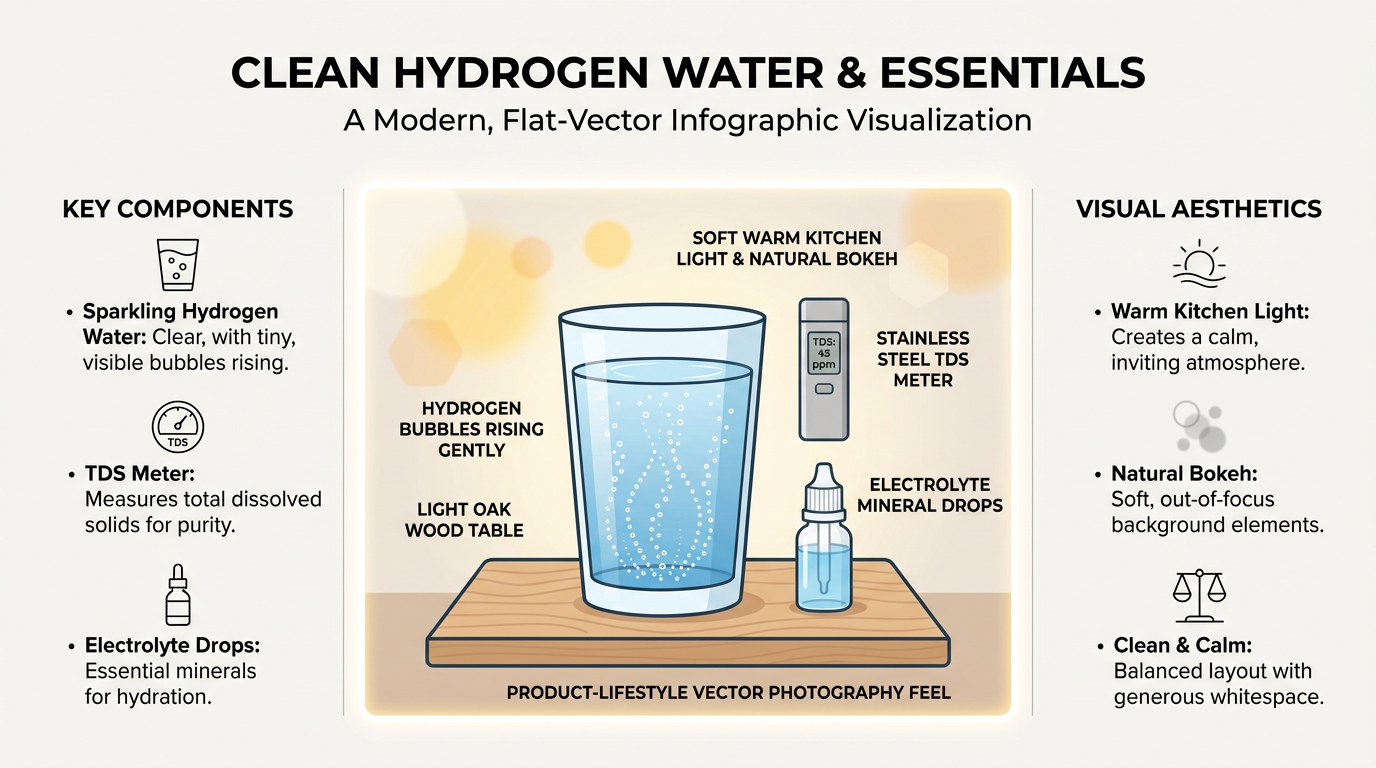
Quick tip: An inexpensive TDS meter gives you a fast, objective read on whether your remineralization step added enough minerals. Aim for a low but non-zero mineral level — enough to conduct current for electrolysis without heavy mineral scaling in the device.
This approach is useful for anyone troubleshooting unexpectedly low hydrogen output, regardless of device model or water source.
Choosing the Right Source Water for a Hydrogen Generator
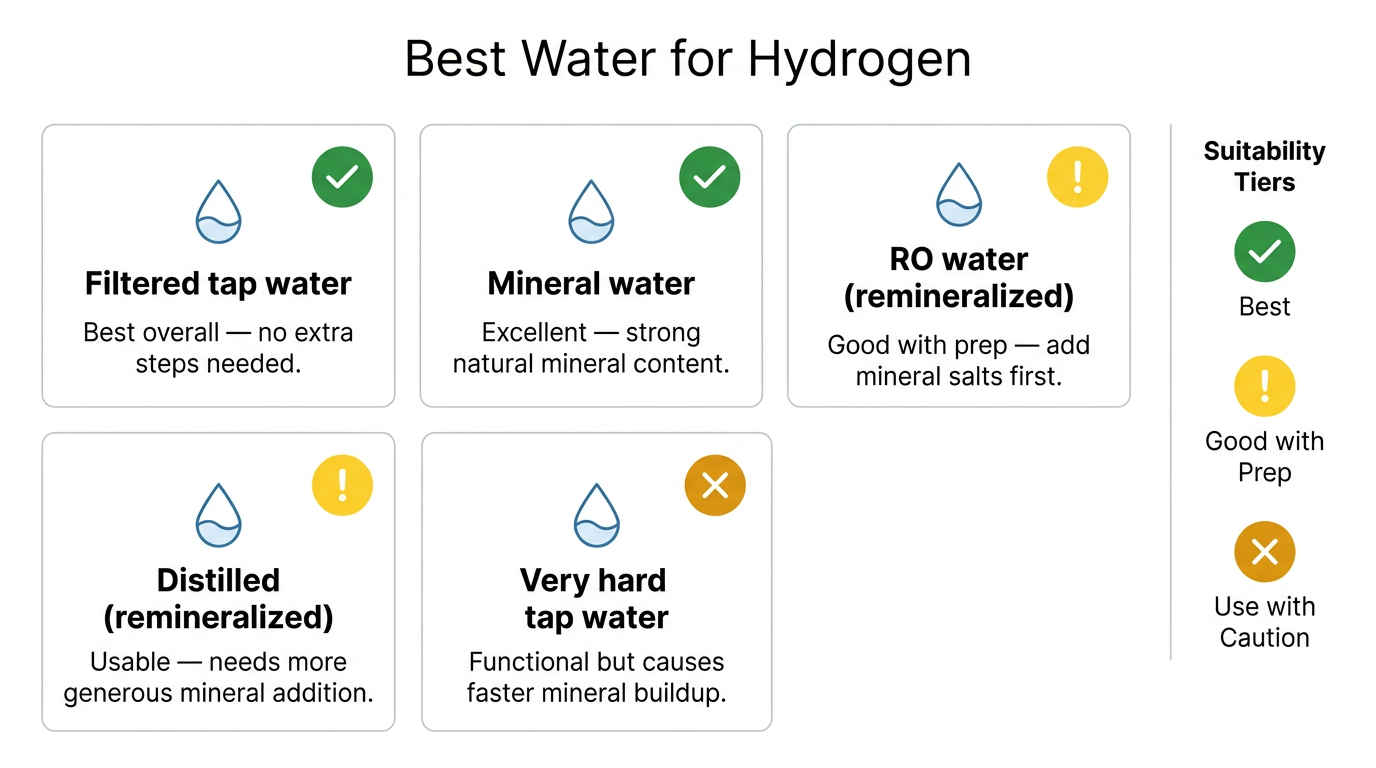
Not all water types are equally suited to hydrogen generation. The key variable is mineral content: too little and electrolysis efficiency drops; too much and mineral buildup in the device becomes a maintenance issue. Here is how common source water types compare in general terms.
| Source Water | General Suitability | Notes |
|---|---|---|
| Filtered tap water | Best overall starting point | Enough natural minerals for efficient electrolysis; chlorine and major contaminants removed |
| Mineral water | Excellent | Natural mineral content supports strong electrolysis; no filtration step needed |
| Reverse osmosis water | Usable with a fix | Low TDS reduces output; remineralize before use for best results |
| Distilled water | Usable with a fix | Even more mineral-depleted than RO; same remineralization approach applies, more strongly |
| Very hard tap water | Functional but higher maintenance | Plenty of ions for electrolysis, but heavy mineral buildup requires more frequent cleaning |
Filtered tap water and mineral water are the most straightforward choices for good hydrogen output without extra steps. If you already run an RO system and want to keep it, remineralizing before generation keeps both the purity advantage and the hydrogen output. To summarize:
- Best choices: filtered tap water, mineral water
- Good with preparation: remineralized RO water, remineralized distilled water
- Avoid without treatment: straight RO water, straight distilled water
- Use with caution: very hard unfiltered tap water
If you use very hard tap water, plan on descaling more often — the trade-off for its high ion content is mineral buildup. See the guide on how to clean a hydrogen water bottle for the maintenance routine, and the best hydrogen water bottles comparison for how specific devices handle different water types.
The Bottom Line
RO water works fine in a hydrogen water generator — it will not damage a quality device — but its low mineral content is why hydrogen output tends to run lower than with filtered tap or mineral water. The fix is reliable and simple: remineralize your RO water before the generation cycle, and most of that efficiency gap closes.
The correct order is always purify, then remineralize, then generate. Reversing any step wastes the work of the others, because running finished hydrogen water back through an RO membrane strips the dissolved gas out.
One factor matters regardless of source water: device quality. A hydrogen generator with a genuine SPE/PEM membrane and visible waste-gas venting handles a range of water types more consistently and more safely than a basic electrolysis device — the one variable that does not change whether you use tap, filtered, or remineralized RO water.
For device-by-device performance and how each handles different source water, see the hydrogen water machine reviews.
A note for readers using tablets in RO water: the tablet’s own label should tell you the water volume and the magnesium it adds; some do not. The Invigorated Water hydrogen tablets review compares five tablets on exactly what their labels disclose.
Frequently Asked Questions
Can I use reverse osmosis water in a hydrogen water bottle?
Yes. RO water is compatible with hydrogen water bottles. The limitation is that its very low mineral content reduces electrolysis efficiency, which can mean lower hydrogen output per cycle. Adding a small amount of food-grade mineral salts before generating is the standard fix most users find effective.
Does RO water damage hydrogen water generators?
RO water does not typically cause direct damage, but very low-mineral water can make the device run less efficiently over time. Some manufacturers advise against distilled or RO water without remineralization, so check your device’s water-quality recommendations before regular use.
What water is best for hydrogen water generation?
Filtered tap water or mineral water generally works best with no extra preparation. Both carry enough natural mineral content for efficient electrolysis while avoiding the heavy chlorine load and contaminants found in unfiltered tap water.
Is distilled water the same as RO water for this purpose?
They are similar — both are very low in minerals — but distilled water is typically even more mineral-depleted than RO water. The same remineralization approach applies to both; if anything, distilled water needs a slightly more generous mineral addition before generating hydrogen.
Does a hydrogen water bottle filter contaminants the way RO does?
No. Hydrogen generation adds dissolved H₂ gas to water; it removes nothing. A hydrogen water bottle is not a filtration device. Always start with water you already trust — from an RO system, a quality filter, or another clean source — and treat hydrogen infusion as a functional addition, not a purification step.