
Affiliate disclosure. HydrogenWaterSafety is reader-supported. As an Amazon Associate, we earn from qualifying purchases at no additional cost to you. This does not change which products we recommend or how we describe them. We do not accept sponsored reviews, free units, or paid editorial placement from any brand listed here. Read our full affiliate disclosure.
Safety note. Hydrogen water bottles and generators are wellness products, not medical devices. They do not diagnose, treat, cure, or prevent any disease. If you have kidney disease, are pregnant, are nursing, or take prescription medication, talk to your doctor before adding daily hydrogen water to your routine. See our full medical disclaimer.
Short version: all four units here state SPE/PEM membrane separation, which is the feature that vents ozone away from your drinking water. Two come from a named manufacturer with an enforceable warranty. One names no brand at all. And every headline PPB figure on this page is a peak reading taken seconds after a cycle — not a level your water holds.
The one we own — PIURIFY 10oz bottle. Branded, SPE/PEM stated, extended warranty, and the only unit in this guide we have in hand.
Best budget entry — aquahealth portable. Named manufacturer, USB rechargeable, lowest price among options with a brand behind them.
Every Amazon listing claims “ultra-high concentration,” every brand uses the same SPE/PEM language, and prices run from $30 to $300 for products that look nearly identical from the outside. They are not the same, and some are not safe. The difference sits in the membrane separation, the electrode material, and whether the manufacturer will document either one.
This guide covers four hydrogen water products across two form factors: portable bottles and an alkaline-plus-hydrogen pitcher. We compared specifications, manufacturer disclosures, electrode materials, and aggregated buyer feedback. One unit — the PIURIFY bottle — we own and have handled hands-on; the other three we evaluate from manufacturer specifications and verified-buyer review synthesis. Our full methodology lives at our testing protocol page.
Not sure hydrogen water is worth buying at all? Read are hydrogen water bottles worth it first — it covers the chemistry-realistic case both ways. For our most thoroughly evaluated premium portable, see our Echo Go+ review.
Short answer: Most portable hydrogen generators advertise headline figures of 6,000 PPB or higher, but Henry’s Law caps sustained dissolved hydrogen in unpressurised water near 1,600 PPB — which is also the top of the range used in published research, roughly 1,000 to 1,600 PPB. So the number on the box is a sealed-cell peak, not what you drink. Judge these devices on brand accountability, stated SPE/PEM construction and warranty terms instead.
Quick answer for “machine” searchers: almost everything sold as a hydrogen water generator is a rechargeable bottle or pitcher with an SPE/PEM electrolysis cell. Countertop machines exist but are a small, higher-priced minority, so this guide ranks the portable generators most people actually buy. If you only want a bottle, see our best hydrogen water bottles comparison; for household volume, the hydrogen water pitchers guide.
Our Top Picks at a Glance
- PIURIFY Hydrogen Water Bottle Generator — the one unit we own and have handled. Branded, SPE/PEM stated, extended warranty.
- aquahealth Rechargeable Portable Bottle — best budget entry with a named manufacturer behind it.
- 480 ml SPE/PEM Hydrogen Water Bottle — larger single serving, SPE/PEM stated, but no brand named.
- PIURIFY 3-in-1 Hydrogen Alkaline Pitcher — alkaline plus hydrogen, 50 oz, largest capacity here.
Comparison Table
The column that matters most is brand identity — it decides whether a warranty is enforceable. SPE/PEM is stated on all four listings; only three name a manufacturer.
| Product | Best For | Form Factor | Brand & PEM | Buy |
|---|---|---|---|---|
 PIURIFY Bottle | The unit we own | Portable, 10 oz | Named brand · SPE/PEM stated | Check |
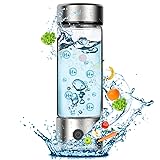 aquahealth | Budget entry | Portable, USB | Named brand · PEM brand-stated | Check |
 480 ml SPE/PEM | Larger serving | Portable, 480 ml | No brand named · SPE/PEM stated | Check |
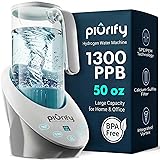 PIURIFY 3-in-1 | Alkaline + hydrogen | Pitcher, 50 oz | Named brand · SPE/PEM stated | Check |
1. PIURIFY Hydrogen Water Bottle Generator
The PIURIFY Hydrogen Water Bottle Generator is the one unit in this guide we own and have handled (full breakdown in our PIURIFY review). PIURIFY is a named, identifiable manufacturer; the listing states SPE/PEM separation, a “Certified H2 Generator,” an extended warranty, and up to 6,300 PPB across three cycles. Treat the 6,300 PPB as a peak post-cycle figure, not a sustained one — per Henry’s Law, dissolved hydrogen in an unpressurized bottle settles toward ~1.6 PPM within minutes of opening the lid. It ships in several colors under the same listing.
- Named, identifiable manufacturer — the warranty is enforceable
- SPE/PEM separation stated on the listing, not inferred
- The one unit here we own and have handled — see our full PIURIFY review
- USB rechargeable, 10 oz — suited to single-user travel and daily carry
- “Up to 6,300 PPB” is a peak claim; Henry’s Law caps sustained dissolved H₂ near 1.6 PPM
- Small 10 oz capacity — single-user, not family volume
- Battery capacity degrades over months of daily cycling
- Hard tap water fouls the membrane — use distilled or RO water
Who should buy it: first-time buyers who want a branded, warrantied bottle from an identifiable manufacturer; single users and travelers; and anyone who specifically wants the bottle we have personally used rather than one we have only researched. For our full assessment and how we evaluate output claims, see our PIURIFY review and testing protocol.
Who should skip it: households needing whole-family volume — choose the pitcher — and buyers who want sustained ultra-high PPM, since no unpressurized bottle holds 6,300 PPB once opened, regardless of brand.
Check the current PIURIFY price on Amazon
2. aquahealth Rechargeable Portable Hydrogen Water Generator Bottle
Of the four products here, the aquahealth Rechargeable Portable Hydrogen Water Generator Bottle is the best budget pick on brand identity. The listing names “aquahealth” as the manufacturer, which materially changes the warranty calculation versus unbranded bottles at the same price. USB rechargeable, single-button operation, suited to travel and single-user daily carry. Open the listing and verify cycle time, capacity, and stated PPM range before ordering — listings update.
- Branded manufacturer with identifiable customer service — warranty enforceable
- USB rechargeable, no plug — suited to travel and gym carry
- Single-button operation, no app pairing or screen calibration
- Lowest entry price among options with a brand behind them
- Smaller capacity than a pitcher — not whole-family daily volume
- Battery degrades over months; replacement timeline depends on use frequency
- Hard tap water fouls portable membranes faster — distilled or RO recommended
- Hydrogen only — no pH adjustment if you also want alkaline water
Who should buy it: travelers, gym-goers, single users, anyone with limited counter space, and first-time buyers who want a branded entry point before committing to a premium portable like the Echo Go+.
Check the current aquahealth price on Amazon
3. 480 ml SPE/PEM Hydrogen Water Bottle
This listing is a 480 ml (16.2 oz) portable hydrogen water bottle stating SPE/PEM separation and a 6,000 PPB output figure. At 480 ml it holds more per cycle than the compact 10 oz bottles, which suits users who want a larger single serving. The listing does not clearly name a manufacturer, so treat warranty enforceability as the open question — confirm the seller and stated terms before ordering. As with every bottle here, read 6,000 PPB as a peak post-cycle figure, not sustained.
- SPE/PEM separation stated on the listing
- 480 ml capacity — larger single serving than compact 10 oz bottles
- Portable, rechargeable — no plumbing or counter space needed
- Listing states a 6,000 PPB peak output figure
- Manufacturer brand not clearly named — warranty enforceability uncertain
- 6,000 PPB is a peak claim; sustained dissolved H₂ caps near 1.6 PPM
- Battery degrades over months, like any rechargeable portable
- No pH adjustment — hydrogen only
Who should buy it: buyers who want a larger 480 ml serving with SPE/PEM stated, and who will confirm the seller and warranty terms before ordering. If brand accountability matters more than capacity, the branded aquahealth or our tested PIURIFY bottle are the safer picks.
Check the current price on Amazon
4. PIURIFY 3-in-1 Hydrogen Alkaline Pitcher
The PIURIFY 3-in-1 is the dual-function option here — a 50 oz pitcher combining hydrogen infusion with filtration. It is the same brand as our tested bottle, and the listing states SPE/PEM separation, so the membrane is disclosed rather than something you chase the seller for. The structured-water and magnetic-water features are marketing flourishes; judge it on hydrogen output and filtration. Confirm the current filter schedule and replacement cost before relying on it daily. See our ozone gas warning for why PEM separation matters in a pitcher.
- Dual function: alkaline pH adjustment plus hydrogen infusion in one device
- 50 oz — the largest capacity here, between bottle and countertop machine
- Calcium-sulfite filtration stated on the listing; verify the current spec
- Same named manufacturer as the bottle we own
- Structured-water and magnetic-water claims are marketing, not verifiable performance
- Filter replacement is a recurring cost — verify schedule and price
- Not appropriate for kidney disease patients without medical guidance
- Highest price here — single-purpose buyers overpay for the dual function
Who should buy it: households where one person wants alkaline water and another wants hydrogen, buyers who want filtration plus hydrogen in one pitcher, and users comfortable with regular filter replacement.
Who should skip it: patients with chronic kidney disease, since alkaline water combined with CKD requires medical guidance; single-purpose hydrogen-only buyers; and anyone who just wants the simplest tested bottle. For how alkaline differs from hydrogen at the molecular level, see hydrogen water vs alkaline water.
Check the current PIURIFY pitcher price on Amazon
Which Hydrogen Water Device Matches Your Specific Need
How We Evaluated These Hydrogen Water Generators
We are an independent hydrogen water review site. One unit in this guide — the PIURIFY bottle — we own and have handled hands-on (see our PIURIFY review). The other three we evaluate at Tier D: buyer-review synthesis combined with manufacturer specification audit.
- Specification audit: form factor, brand identity, capacity, listing-stated PPM/PPB, SPE/PEM disclosure, electrode material, warranty length and gas-exhaust documentation, pulled from each Amazon listing
- Verified-purchase review analysis weighted toward the past six months, filtered for safety outcomes (taste, smell, ozone complaints) and durability (gasket integrity, PPM stability, electrode scaling)
- Cross-referenced advertised output against the concentration range used in published research, per our evaluation method
- Applied Henry’s Law to every PPM claim: dissolved hydrogen in unpressurised water saturates near 1.6 PPM at standard temperature and pressure
- Referenced the Molecular Hydrogen Institute summary of human clinical trials, 1.0 to 1.6 PPM research range, and our own ozone methodology at our ozone gas warning page
- Own three of the four units — only the PIURIFY bottle is in our hands
- Measure PPB with H2 Blue on the aquahealth, the 480 ml bottle, or the pitcher
- Run continuous-use durability testing over weeks or months on any unit
- Verify warranty fulfilment by submitting claims to any manufacturer
How Hydrogen Water Generators Actually Work
The Basic Mechanism
Hydrogen water generators use electrolysis to split water (H₂O) into hydrogen gas (H₂) and oxygen (O₂). The hydrogen dissolves into the drinking-side water; the oxygen — along with any trace chlorine or ozone byproducts — needs to vent through a separate channel. The component that physically separates the two streams is the Solid Polymer Electrolyte (SPE) paired with a Proton Exchange Membrane (PEM).
Without SPE/PEM separation, raw electrolysis can pass byproducts directly into the drinking water. This was the historical defect of first-wave alkaline ionizers in the 1990s and early 2000s. It is still the failure mode of the cheapest unbranded generators sold today. The single most useful visual check on any product photo: can you identify a labelled gas-exhaust vent? If you cannot, treat it as a yellow flag.
The Three Things That Decide Whether a Unit Is Worth Buying
- SPE/PEM membrane present and documented. Either explicit listing language, or a visible exhaust vent in product photos. No documentation, no purchase.
- Realistic PPM/PPB claims. Clinical research range is 1.0 to 1.6 PPM sustained. Pressurised bottles peak briefly higher. Sustained claims above 5 PPM in unpressurised water violate Henry’s Law.
- Titanium-platinum or platinum-iridium electrodes. Generic “metal plate” specifications without material disclosure raise the risk of metal ions leaching into drinking water over months of daily use.
For the chemistry detail on hydrogen retention and gas-off curves, see how long does hydrogen water last. For ozone-byproduct safety, see our ozone gas warning.
The Generator Isn’t Enough on Its Own
A new hydrogen water bottle fixes part of the equation. These five decide whether you actually get anything out of it.
- Water source matters more than the bottle. Hard tap water with high TDS scales electrodes within weeks. Use distilled or RO-filtered water unless your unit has a built-in pre-filter — only the PIURIFY pitcher here includes filtration. If you use RO water, its very low mineral content can lower output, so see how to remineralize RO water for hydrogen generation.
- Drink within 30 minutes. Hydrogen is a small, non-polar gas that escapes any seal eventually. The post-cycle peak fades fast — how long does hydrogen water last covers the gas-off curve.
- Cleaning isn’t optional. Even with distilled water, mineral film accumulates over weeks. Run a weekly citric acid descale cycle and never let the membrane dry completely. See our cleaning guide.
- Avoid the cheapest unbranded units. Listings with no SPE/PEM disclosure, no visible gas exhaust vent, and no identifiable manufacturer carry meaningfully higher safety risk than a branded entry-level option.
- Hydrogen water is not a medical treatment. No bottle on the market is FDA-cleared for any specific health outcome. Published clinical research uses 1.0 to 1.6 PPM as the dose range and the outcomes are modest. Treat this as a wellness purchase.
Frequently Asked Questions
Are hydrogen water bottles worth the money?
Can I use tap water in any of these hydrogen generators?
What is the difference between a hydrogen water generator and an alkaline water ionizer?
How long does hydrogen water stay effective after generation?
Are cheap Amazon hydrogen water bottles a scam?
Can hydrogen water generators produce ozone as a byproduct?
How do I clean a hydrogen water generator?
Bottom Line
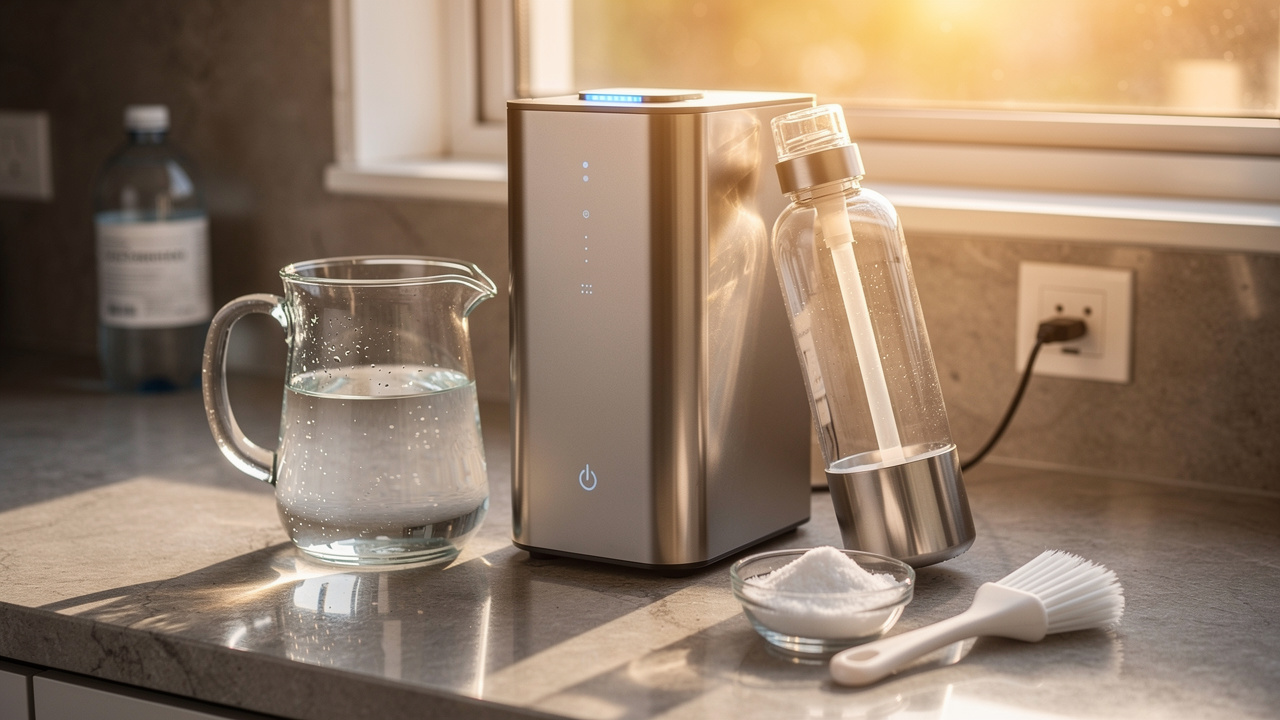
One of these four is a unit we own
The PIURIFY Hydrogen Water Bottle Generator is the one we have in hand — branded, SPE/PEM stated, extended warranty — and it is the bottle we point most readers to for that reason. For a lower-cost branded entry point, the aquahealth portable is the budget alternative: USB rechargeable, from an identifiable manufacturer, so you are paying for accountability rather than gambling on an unbranded listing.
For a larger single serving the 480 ml SPE/PEM bottle pours more per cycle — confirm the seller and warranty first, because no brand is named. If you want alkaline pH adjustment alongside hydrogen, or simply the largest capacity here, the PIURIFY 3-in-1 Pitcher handles the dual use case with SPE/PEM stated on the listing.
Across all four, read “high concentration” and high-PPB figures as brief post-cycle peaks, not sustained levels. Henry’s Law caps dissolved hydrogen near 1.6 PPM once the lid opens. Budget constraints are valid; safety verification is not optional.
Whichever you pick, the routine is the same: use distilled or pre-filtered water, drink within 30 minutes of generation, descale weekly with citric acid, and never let the membrane dry out completely. Expect one to two weeks before you can judge whether the unit works for you. If you notice plastic taste, chemical smell, or throat irritation at any point, stop using it and return it.
Medical disclaimer: This guide covers consumer-grade hydrogen water bottles and generators. It is not medical advice. Hydrogen water is a wellness product, not a treatment. Talk to your doctor before adding hydrogen water to your routine if you have kidney disease, are pregnant, are nursing, take prescription medication, or have a chronic health condition. See our full medical disclaimer. For our complete testing methodology, see our research protocol.
Last update on 2026-09-15 / Affiliate links / Images from Amazon Product Advertising API
This product presentation was made with AAWP plugin.