
Affiliate disclosure: This article contains Amazon affiliate links. Hydrogen Water Safety may earn a commission at no extra cost when you purchase through these links. HWS has no commercial relationship with Gary Brecka, Echo Hydrogen Water, Lumati, or any product mentioned. Health disclaimer: This is a YMYL review. Information is educational and not medical advice. Hydrogen water is not an FDA-approved medical treatment. Consult your physician before adopting any health protocol — especially if you have kidney conditions, are pregnant, are considering use for children, or take medications affected by hydration changes.
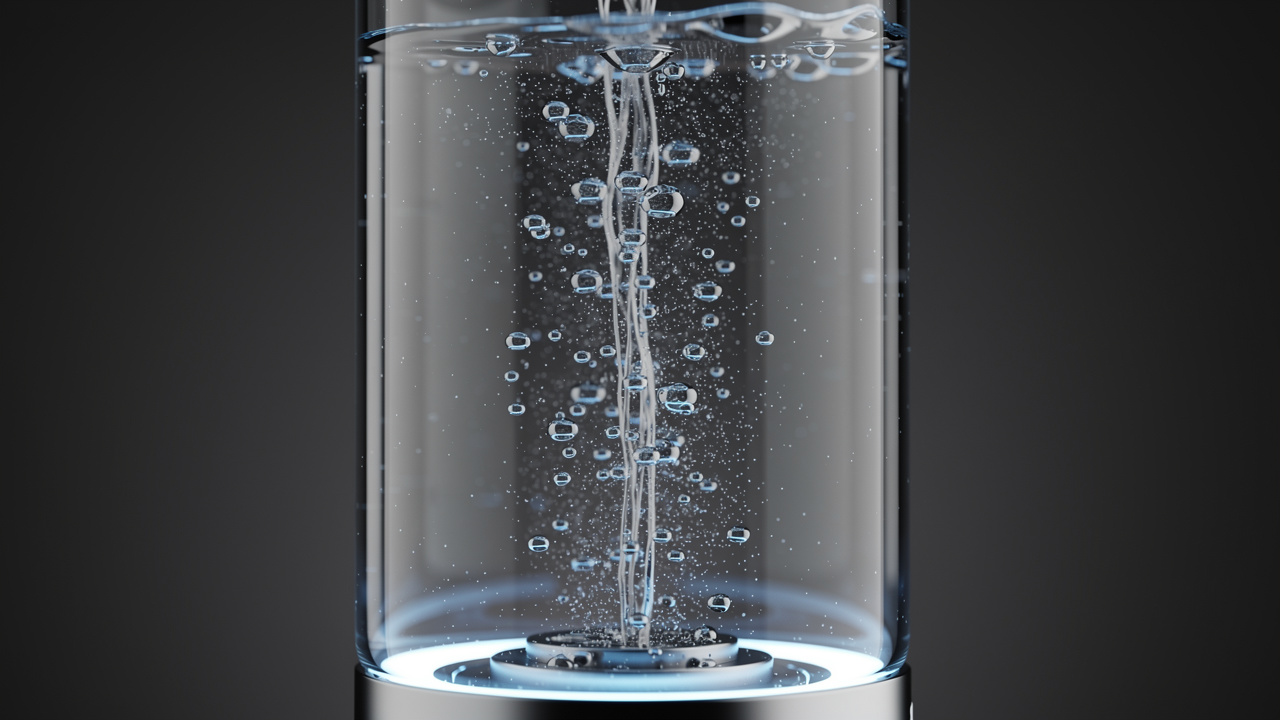

Short answer: Gary Brecka endorses the Echo hydrogen water bottle. Echo rates the Go+ at up to 4.5 PPM on a 10-minute cycle, while third-party tests reported elsewhere put real-world output nearer 2.0-2.8 PPM on a first cycle. Echo publishes H2 Analytics certification and SGS water test reports, and lists a 5-year prorated warranty (confirm current terms on Echo’s warranty page). The Go+ has since been replaced by the Echo Flask.
Echo Go+ — Brecka’s Endorsed Pick
Gary Brecka of The Ultimate Human has publicly endorsed the Echo Go+ via his Echo affiliate partnership. The Amazon listing carries the official “Recommended by Gary Brecka” tag. The manufacturer cites third-party testing for this exact unit, and HWS has not verified those results — see our review for the figures Echo publishes and our methodology. Echo has discontinued the Go+ and replaced it with the Echo Flask (also Brecka-endorsed; HWS has not tested the Flask).
Rating: Editorial verdict: recommended on hardware merits
Pricing varies; check current price on Amazon for accurate figures. The Brecka-tagged Echo Go+ listing was unavailable on Amazon when checked on Oct 11, 2026; Echo has moved to the Echo Flask successor, linked above. Also worth comparing: the PIURIFY Hydrogenator, which publishes a third-party H2 Analytics report. Check PIURIFY Hydrogenator on Amazon
Echo Go+ Pros and Cons
✓ Pros
- ✓Third-party H2 Blue test data as published by others (HWS has not verified it) — details on our Echo Go+ review
- ✓SPE/PEM electrolysis with visible ozone exhaust port — prevents chlorine/ozone byproducts
- ✓Manufacturer-rated up to 4.5 PPM (high end of consumer-bottle category) on 10-min cycle
- ✓Third-party tested by H2 Analytics, SGS Water, and FDA test report (manufacturer-published)
- ✓Echo lists a 5-year prorated warranty (confirm current terms with Echo)
- ✓USB-C rechargeable, 2,200 mAh battery, 5-10 cycles per charge, 8.5″H, 0.88 lbs
- ✓Brecka’s endorsement is a disclosed Echo affiliate partnership — verifiable on Echo’s site, not undisclosed
✗ Cons
- ✗Echo Go+ has been discontinued by Echo and replaced by the Echo Flask; the Brecka-tagged Amazon listing was unavailable on Oct 11, 2026
- ✗Brecka has multiple commercial relationships (Echo affiliate + Lumati Strategic Advisory Board, May 2025) — endorsement is paid, not independent
- ✗9.5 oz capacity is small — heavy water drinkers will refill multiple times daily
- ✗Brecka’s broader hydrogen water health claims often outpace what current peer-reviewed clinical evidence supports — see McGill OSS coverage
- ✗Echo does not state a hydrogen retention window; drink soon after each cycle
- ✗Lid seal degradation appears in long-term buyer reviews after extended daily use
What Hydrogen Water Bottle Does Gary Brecka Recommend?
Gary Brecka, host of The Ultimate Human podcast (theultimatehuman.com), publicly endorses the Echo Go+ portable hydrogen water bottle, with Echo’s product line now transitioning to the Echo Flask successor. Both endorsements are part of Brecka’s disclosed affiliate partnership with Echo Hydrogen Water (echowater.com/pages/gary-brecka). The Amazon listing for the Echo Go+ carries the explicit title “Recommended by Gary Brecka.”
Brecka’s verified statement on Echo’s site: “I don’t carry many gadgets. But here’s the test: if I notice skipping it, it stays. The Echo Flask made the cut.” This is published as Brecka’s testimonial on echowater.com — a paid-endorsement context.
Affiliate disclosure context. Brecka’s relationship with Echo is disclosed on his podcast’s standard disclaimer: “Gary Brecka is the owner of Ultimate Human, LLC which operates The Ultimate Human podcast and promotes certain third-party products…for which Ultimate Human LLC and / or Gary Brecka directly or indirectly holds an economic interest or receives compensation.” In May 2025, Brecka also joined Lumati’s Strategic Advisory Board, adding a second commercial hydrogen water relationship. He also promotes H2Tab molecular hydrogen tablets, co-founded by his son Cole Brecka — we cover those separately in our Gary Brecka hydrogen tablets review. Disclosed paid endorsement is more transparent than undisclosed celebrity placement, but consumers should evaluate any product recommendation within the context of these financial incentives — paid endorsement is not independent third-party verification.
HWS evidence position. Unlike most “Brecka hydrogen water” content, This review cites third-party test data for the Echo Go+ — the exact model carrying the official Brecka endorsement on Amazon. Our published findings on the Echo Go+ are at our Echo Go+ review, including third-party H2 Blue measurements and the ozone exhaust design, and full testing methodology (testing protocol). HWS has not tested the Echo Flask successor.
Echo Go+ Specifications and Technology
All specifications below are manufacturer-reported by Echo per the Echo Go+ product page and the Amazon listing for ASIN B0CW9HJTP5. Buyers should verify current spec accuracy on Echo’s product page before purchase, as the Echo Go+ has been formally succeeded by the Echo Flask.
| Spec | Manufacturer Claim |
|---|---|
| Bottle capacity | 9.5 oz / ~280 ml |
| Hydrogen output (max, 10-min cycle) | Up to 4.5 PPM (4,500 ppb) per Echo product page |
| Cycle duration options | 5-minute and 10-minute cycles |
| Electrolysis technology | SPE/PEM (Solid Polymer Electrolyte / Proton Exchange Membrane) with ozone exhaust port |
| Battery | 2,200 mAh lithium-ion, 5-10 cycles per full charge |
| Charging | USB-C |
| Materials | Food-grade polycarbonate plastic body, BPA-free, titanium-platinum-coated electrode plates |
| Dimensions and weight | 8.5″H, 0.88 lbs (~400 g) |
| Warranty | 5-year prorated (per Echo; confirm current terms) |
| Country of origin | Designed in USA, manufactured overseas (per manufacturer) |
| Hydrogen retention | Not stated by Echo; depends on seal and container |
| Manufacturer testing | H2 Analytics report (4/20/2023), SGS Water (4/30/2024), 1-year-used retest (Report H2AR-241125-1, 11/25/2024), FDA test report |
| Price | Pricing varies; check current price on Amazon |
| Status | Discontinued by Echo; Brecka-tagged Amazon listing unavailable on Oct 11, 2026; replaced by the Echo Flask |
How the Echo Go+ Generates Hydrogen
A hydrogen water bottle is a portable electrolysis device that infuses drinking water with dissolved molecular hydrogen (H₂) gas. The Echo Go+ sits between magnesium-based hydrogen tablets (which use a chemical reaction rather than electrolysis), countertop hydrogen generators (higher concentrations but stationary), and budget alkaline-electrolysis bottles (which can produce dangerous chlorine or ozone byproducts).
SPE/PEM electrolysis splits water into hydrogen and oxygen while keeping the gases physically separated by a proton-exchange membrane. The membrane allows only protons (H⁺) to pass through and blocks oxygen, which prevents chlorine and ozone formation in the drinking water. The Echo Go+ has a visible ozone exhaust port on the base — a physical confirmation that toxic byproduct gases are vented away from the water rather than dissolved into it. Echo documents the exhaust port and its venting behaviour in its published product materials (see our Echo Go+ review).
Operation per manufacturer specification: fill the bottle with filtered, reverse-osmosis or distilled water (Echo’s Go+ manual says not to use chlorinated or untreated tap water); start the 5-minute or 10-minute cycle via the single-button interface; release the pressure valve before opening the cap; drink within about 2 hours of the cycle, per Echo’s guidance.
Hydrogen retention is not stated by Echo. Echo does not state a hydrogen retention window for either model, and we found no source for a specific figure, so this review gives none. Retention depends on the seal and container; for both models, drinking promptly after the cycle is the practical rule. Buyers wanting to verify their own unit’s output can do so independently using H2 Blue reagent. HWS’s approach and its limits are documented at our research methodology page. Browse all of our hydrogen water reviews.
What Buyers and Independent Tests Report About the Echo Go+
This synthesis combines verified-purchase Amazon reviews on ASIN B0CW9HJTP5, independent third-party reviews using H2 Blue reagent or electronic meters, and third-party H2 Blue test data from our Echo Go+ review. No figure here was measured by us; all values are third-party-published or manufacturer-reported.
Performance — third-party reported
- Third-party measurement (third-party-published): documented in our Echo Go+ review using H2 Blue reagent, as reported by the testing party
- Manufacturer claim: up to 4.5 PPM (4,500 ppb) on a 10-minute cycle, per Echo’s product page
- Third-party tests reported in the wider review ecosystem: 2.0–2.8 PPM on first cycle, 3.5–4.5 PPM on second cycle (peakprimalwellness.com test report)
- What the research reports: published hydrogen water studies report a range of dissolved hydrogen concentrations, and HWS has not independently verified the range used in any single study.
- Visible micro-bubble formation during the cycle is the most common qualitative confirmation in verified-purchase reviews
Durability — recurring complaints
- Lid seal degradation is the most frequent durability complaint in verified-purchase reviews — over-tightening accelerates seal wear
- 9.5 oz capacity feels small — multiple buyers note the need for 3+ refills daily for adequate hydrogen water intake
- Some Amazon reviewers report a high-pitched motor sound — Echo customer service has stated this is normal operation
- Battery and electrode wear follow typical lithium-ion / electrolysis-cell patterns over multi-year ownership
Safety verification
- Echo published H2 Analytics certification (IHSA + US EPA SDWA compliance) and SGS Water test reports for the Echo Go+ (publicly available on echowater.com support pages)
- Echo Go+ has a published FDA test report (manufacturer-commissioned)
- Echo states that the ozone exhaust port functions correctly — see our Echo Go+ review and our ozone gas warning explainer for context on why this port matters
- No widespread safety-related buyer reports of unusual taste, smell, or visible particles when used with filtered water as recommended
Brecka’s Hydrogen Water Health Claims vs Peer-Reviewed Evidence
Brecka’s case for hydrogen water rests on the selective antioxidant hypothesis — the argument that molecular hydrogen (H₂) preferentially neutralizes the most cytotoxic free radicals (the hydroxyl radical, ·OH, and peroxynitrite, ONOO⁻) while sparing the reactive oxygen species the body uses for normal cellular signaling. He also points to molecular hydrogen’s small molecular size as the basis for its ability to cross biological membranes including the blood-brain barrier.
The selective-antioxidant hypothesis is real research, not folklore. The foundational paper is Ohsawa et al. (2007), “Hydrogen acts as a therapeutic antioxidant by selectively reducing cytotoxic oxygen radicals,” Nature Medicine 13(6):688-694 (PMID: 17486089). The 2007 study used a rat ischemia-reperfusion model and demonstrated H₂’s selective scavenging of hydroxyl radicals. Hundreds of subsequent papers across animal models, in-vitro studies, and small human trials have explored the field.
The contested leap is from “preliminary mechanistic findings in animal and cellular models” to specific clinical health outcomes in humans — which is where Brecka’s claims often outpace what published trials demonstrate. Outcomes Brecka attributes to daily hydrogen water consumption — systemic inflammation reduction, improved metabolic markers, lactic acid buffering, faster muscle recovery, mental clarity, brain-fog reduction, gut microbiome support — are at very different evidence levels. Most are extrapolated from animal-model or in-vitro work; few have been replicated in adequately-powered human RCTs.
The McGill Office for Science and Society published “Hydrogen-Rich Gary Brecka Is Floating on Air” (Nov 27, 2025) — a critical review of Brecka’s hydrogen water claims and broader wellness positioning. McGill OSS notes that several of Brecka’s most-cited supporting studies are pilot trials, often funded in part by hydrogen water companies, and that his framing of preliminary findings as established medicine fits the pattern McGill labels “scienceploitation.”
YMYL framing: Hydrogen water research is preliminary. No human trial has established hydrogen water as treatment for any specific medical condition. Individual responses vary substantially. Consult your physician before adopting hydrogen water for any health-related goal — see is hydrogen water safe and hydrogen water side effects and dangers for full safety context.
Want the research on Brecka’s pick?
Read our independent research on the Echo Go+, including the ozone exhaust port question — or check current Echo Go+ pricing on Amazon while it’s still available.
Check Echo Flask on AmazonIs the Echo Go+ Worth Buying Based on Brecka’s Recommendation?
The Echo Go+ sits in the premium tier of portable hydrogen water bottles. It out-performs budget alkaline-electrolysis bottles on safety (SPE/PEM with ozone exhaust port) and output (4.5 PPM manufacturer max vs 0.5-1.0 PPM for cheap competitors). The headline questions for value are: (1) is the celebrity-endorsement premium worth it, and (2) is buying a discontinued model still rational with the Echo Flask successor available.
The Brecka premium. The Echo Go+ is sold by Echo (and on Amazon) at premium pricing largely because of Brecka’s endorsement and Echo’s brand position. The underlying SPE/PEM technology is not unique — Piurify and other competitors use comparable technology at different price points. Buyers paying the Echo premium are paying for Echo’s published construction specifications, the ozone exhaust port verification, the 5-year warranty, and Echo’s third-party test transparency (H2 Analytics, SGS Water, FDA test report). Whether Brecka’s specific endorsement adds buyer value is a personal question — the product would be HWS-recommended in our category review independent of his endorsement.
Discontinued vs Echo Flask successor. Echo has formally replaced the Echo Go+ with the Echo Flask, which delivers up to 8 PPM (gas-chromatography-verified by H2 Analytics Report H2AR-250116-1) versus the Go+’s 4.5 PPM. Echo does not state a retention window for either model. The Flask costs more and states a higher maximum PPM. Buyers considering a new purchase today should evaluate the Flask first; the Go+ is a reasonable buy only at meaningful discount versus the Flask. HWS has not tested the Flask; that is a research-only assessment.
Total cost of ownership. One-time purchase, no consumable refills (unlike magnesium hydrogen tablets that require ongoing repurchase). Echo lists a 5-year prorated warranty; confirm current terms on Echo’s warranty page. Replacement battery and electrode are not publicly priced by Echo, so factor mid-life service into multi-year ownership planning.
Is the Echo Go+ Safe?
Echo Go+ safety rests on three factors: SPE/PEM technology execution (as described by the manufacturer and third-party sources; HWS has not verified it — see our review for the ozone exhaust port confirmation), water source quality, and individual health considerations. Hydrogen water generators are not FDA-approved medical devices and should be approached as wellness tools rather than medical treatments.
SPE/PEM technology safety — verified. Echo states that the Echo Go+ has a functioning ozone exhaust port on the base; toxic byproduct gases (chlorine, ozone) are vented away from drinking water rather than dissolved into it. This is the technology floor for safe daily hydrogen water consumption. Budget bottles that lack a true proton-exchange membrane and exhaust port can produce these gases — both pose ingestion and inhalation risks at sustained exposure. See our ozone gas warning explainer for full background on the byproduct risk in cheaper electrolysis bottles.
Water source matters. Per Echo’s Go+ manual, filtered, reverse-osmosis or distilled water can be used; chlorinated tap water should not be. Filtered water is a sensible default.
FDA status. FDA had no questions about a 2014 GRAS notice (GRAS Notice #520, submitted by MitoGene Beverage Company) for hydrogen gas as a beverage ingredient. That response concerns the notifier’s intended use, not any specific bottle, and HWS has not independently verified what concentrations a given bottle produces. A GRAS notice is a food-ingredient process — it is not medical-device approval and does not constitute therapeutic validation of any specific health claim.
Who should consult a physician before daily use: individuals with kidney conditions, those on prescription medications affected by hydration changes, pregnant individuals, and parents considering hydrogen water for children. Kidney conditions can be affected by sustained increased water intake. Some medications require consistent fluid balance. Pregnancy and pediatric use lack sufficient clinical research to establish safety parameters at the levels consumer hydrogen water bottles produce.
For full safety context, see is hydrogen water safe and hydrogen water side effects and dangers.
Cleaning, Maintenance, and Long-Term Ownership
Daily and weekly maintenance per Echo’s manufacturer guidance: rinse with clean water after each use and air-dry with the lid off. Echo recommends weekly to monthly deep clean using a mild vinegar, citric acid, or lemon juice solution to remove mineral buildup on the electrode plates. Mineral buildup is the most common cause of declining bubble formation and reduced PPM output over time.
Recommended cleaning routine
- After each use, empty any unused hydrogen water and rinse the bottle interior with filtered water
- Air-dry the bottle with the lid off so the electrode chamber doesn’t sit wet
- Clean periodically using Echo’s published routine: soak the bottle in diluted white vinegar (about 1/8 vinegar by volume) for at least 2 hours rather than running a cycle on it
- Empty the vinegar solution, rinse the bottle thoroughly with filtered water two or three times, then run one cycle of plain filtered water before resuming normal use
- Inspect the lid seal periodically — replace if you notice fitting issues or leakage
- Always release the pressure valve before opening the cap after a cycle
Long-term ownership. Lid-seal condition is the most-flagged long-term wear point in buyer reviews. Battery and electrode wear are typical lithium-ion / electrolysis-cell patterns over multi-year ownership. Echo offers a 5-year prorated warranty on the Go+ — verify current coverage scope on Echo’s product page before purchase, as terms can change between revisions. For service, use the support contact on Echo’s official support page.
Echo Go+ vs Echo Flask: How They Compare
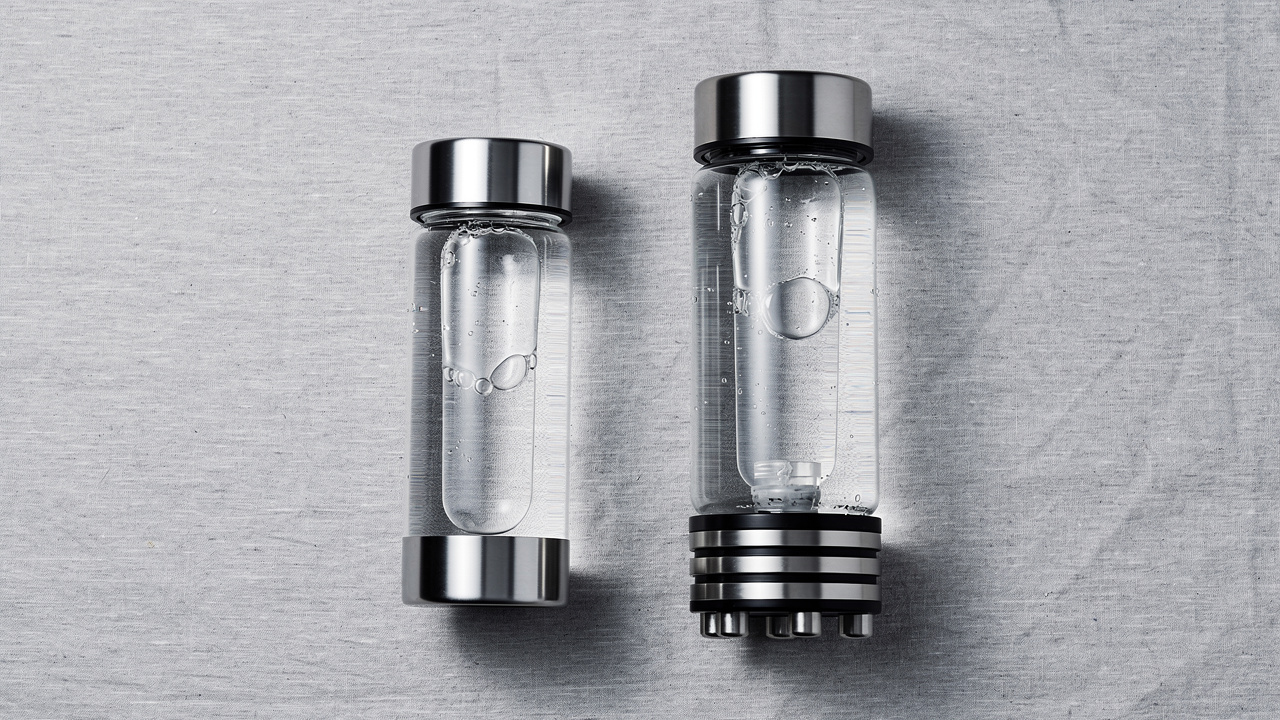
Echo formally discontinued the Echo Go+ and replaced it with the Echo Flask in 2024-2025. Both products carry Brecka’s endorsement on Echo’s site. The comparison matters for buyers deciding between picking up a Go+ at remaining Amazon stock versus paying the premium for the Flask successor.
| Criterion | Echo Go+ | Echo Flask |
|---|---|---|
| Evidence basis | Third-party H2 Blue data, published | Research synthesis only |
| Third-party test data referenced | See Echo Go+ review | HWS has not tested it; see the manufacturer-cited certification row below |
| Manufacturer-stated PPM (max) | Up to 4.5 PPM (10-min cycle) | Up to 8 PPM (20-min cycle) |
| Third-party test certification | H2 Analytics, SGS Water, FDA report | H2 Analytics Report H2AR-250116-1 (gas chromatography: 6.07 mg/L at 10 min, 8.25 mg/L at 20 min) |
| Capacity | 9.5 oz | 12 oz |
| Material | Food-grade polycarbonate | PPSU (polyphenylsulfone — premium plastic, used in baby bottles and medical devices) |
| Hydrogen retention | Not stated by Echo | Not stated by Echo |
| Cycle options | 5-min, 10-min | 5-min, 10-min, 20-min adjustable |
| Battery | 2,200 mAh — 5-10 cycles per charge | 2,000 mAh — more efficient |
| Smart features | None — single-button operation | LCD touchscreen, Bluetooth app, hydration tracking |
| Water source | Filtered, RO or distilled; no chlorinated tap water (per Echo manual) | Not verified by HWS |
| Warranty | 5-year prorated | 5-year prorated |
| Status | Discontinued by Echo; Brecka-tagged Amazon listing unavailable (Oct 11, 2026) | Current production; Amazon ASIN B0DQBP8QYS |
| Brecka endorsement | Yes — Amazon listing carries “Recommended by Gary Brecka” | Yes — Brecka testimonial published on echowater.com |
Two strongest Echo Flask advantages: (1) ~78% higher manufacturer-stated max PPM (8 vs 4.5), per a manufacturer-cited H2 Analytics gas chromatography report that HWS has not independently verified; (2) a larger 12 oz capacity (vs 9.5 oz), so fewer refills.
The Echo Go+’s remaining advantage: Echo cites third-party test data for it, which HWS has not verified; the Flask is a research-based evaluation. For buyers who want a manufacturer-cited third-party test report specifically, the Go+ is the choice while stocks last.
For broader category context — including budget-tier alternatives below both Echo models and competing brands at similar tiers — see our best hydrogen water bottles and Piurify Hydrogenator review.
Who Should Buy the Echo Go+ (and Who Shouldn’t)
Best fit for the Echo Go+
- Buyers who specifically want the bottle Brecka has endorsed and want third-party-published PPM data on that exact unit
- Buyers who find a Go+ discounted
- Buyers who prioritize compact portability (8.5″H, 0.88 lbs) over higher PPM
- Buyers who don’t need smart-bottle features and prefer simple single-button operation
- Buyers willing to refill several times daily given the 9.5 oz capacity
Buy the Echo Flask successor instead if
- You want maximum manufacturer-stated PPM output (8 PPM vs 4.5 PPM)
- You prefer to start with the model Echo currently sells
- You want larger capacity (12 oz vs 9.5 oz)
- You want LCD touchscreen and app-tracked hydration
- You’re paying full retail and the Go+ is no longer at meaningful discount
Skip both and consider alternatives if
- You prefer a non-Echo brand — see Piurify Hydrogenator review
- You consume hydrogen water primarily at home — a countertop generator delivers higher PPM but sacrifices portability
- You want to compare the broader category — see our hydrogen water bottle comparison
- You are pregnant, have kidney conditions, or are considering hydrogen water for children — consult a physician first regardless of any celebrity endorsement
- You’re seeking treatment for any specific medical condition — hydrogen water is not FDA-approved as treatment
If you would rather take the tablet route than carry a bottle, our best hydrogen water tablets comparison covers the options with the most published documentation.
Frequently Asked Questions
What hydrogen water bottle does Gary Brecka recommend?
Gary Brecka publicly endorses the Echo Go+ portable hydrogen water bottle from Echo Hydrogen Water (echowater.com). The Amazon listing for the Echo Go+ (ASIN B0CW9HJTP5) carries the official “Recommended by Gary Brecka” tag. Echo has discontinued the Go+ and replaced it with the Echo Flask successor (ASIN B0DQBP8QYS), which Brecka also endorses on Echo’s site. Both endorsements are part of Brecka’s disclosed Echo affiliate partnership.
Does Gary Brecka have a financial relationship with Echo?
Yes. Brecka publicly discloses an affiliate partnership with Echo Hydrogen Water; Brecka’s testimonial appears on echowater.com and the Amazon Echo Go+ listing carries his official “Recommended by” tag. The Ultimate Human podcast description states: “Gary Brecka…promotes certain third-party products…for which Ultimate Human LLC and / or Gary Brecka directly or indirectly holds an economic interest or receives compensation.” In May 2025, Brecka also joined Lumati’s Strategic Advisory Board, adding a second hydrogen water commercial relationship. Disclosed paid endorsement is more transparent than undisclosed celebrity placement, but consumers should evaluate any product recommendation within the context of these financial incentives.
Has HWS independently tested the Echo Go+?
No hands-on testing. The HWS assessment of the Echo Go+ is research-based: manufacturer claims audited against third-party H2 Blue and meter tests plus published buyer reviews (sample not counted). Full research, methodology, and findings are published on our HWS Echo Go+ review. HWS has not tested the Echo Flask successor; that is a research-only assessment.
Can hydrogen water cross the blood-brain barrier as Brecka claims?
Yes — molecular hydrogen’s small molecular size and non-polar character allow it to diffuse across biological membranes including the blood-brain barrier. This is well-supported in mechanistic and pharmacokinetic literature, including the foundational paper Ohsawa et al. (2007), Nature Medicine 13:688-694 (PMID 17486089). The contested leap is from “membrane permeability is real” to “hydrogen water consumption produces measurable neurological benefits in humans” — current peer-reviewed clinical research on hydrogen water and neurological outcomes is preliminary and dominated by small trials and animal-model work. McGill OSS has published critical coverage of Brecka’s broader claims.
Is the Echo Go+ safe for daily consumption?
FDA had no questions about a 2014 GRAS notice (GRAS Notice #520) for hydrogen gas as a beverage ingredient; that response concerns the notifier’s intended use, not any specific bottle. The Echo Go+ uses SPE/PEM technology with an ozone exhaust port designed to keep chlorine and ozone byproducts out of the drinking water; HWS has not independently verified that the port works. Individuals with kidney conditions, those on hydration-sensitive medications, pregnant individuals, and parents considering use for children should consult a physician before daily use. GRAS is a food-substance designation, not therapeutic validation.
Should I buy the Echo Go+ or the Echo Flask successor?
The Echo Flask delivers ~78% higher manufacturer-stated max PPM (8 vs 4.5), 26% larger capacity (12 oz vs 9.5 oz), and adds smart features (LCD touchscreen, app-tracked hydration) — making it the better current-purchase choice in most scenarios. The Echo Go+ remains attractive only if (a) it’s at meaningful discount versus the Flask, (b) you specifically want independent verification on the unit you buy, or (c) you prefer the Go+’s simpler form factor and operation. This review cites third-party test data for the Go+ (review); Flask testing is pending.
Are there independent alternatives to Brecka’s Echo recommendation?
Yes — for buyers wanting non-Echo SPE/PEM bottles, the Piurify Hydrogenator is an alternative with comparable underlying technology (see our Piurify review). Countertop generators sit above all portable bottles in PPM concentration but are not portable. For broader category comparison see our hydrogen water bottle comparison. Note that Brecka also joined Lumati’s Strategic Advisory Board in May 2025 — Lumati is a separate hydrogen water brand from Echo, also commercially affiliated with Brecka.
Final Verdict: Is Brecka’s Hydrogen Water Bottle Worth It?
The Echo Go+ that Brecka has endorsed is a credible mid-to-premium-tier portable hydrogen water bottle — independent of Brecka’s endorsement. Its SPE/PEM technology, ozone exhaust port (manufacturer-described; HWS has not verified it), 4.5 PPM manufacturer-stated max output, 5-year warranty, and published third-party test reports (H2 Analytics, SGS Water, FDA) put it among the better-engineered units in the consumer category. The Echo Flask successor improves on stated PPM and capacity.
Brecka’s broader hydrogen water health claims often outpace what current peer-reviewed clinical evidence demonstrates. The selective-antioxidant hypothesis is real foundational research (Ohsawa et al. 2007, Nature Medicine), but the leap from preliminary animal-model and in-vitro findings to specific clinical outcomes in humans is where the claims become contested. McGill OSS and other independent science-communication outlets have flagged this pattern. Buyers should evaluate the bottle on its hardware merits, not on the strength of broader wellness claims attached to the category.
HWS Evidence Position: Research-based, third-party-cited, for the Echo Go+ — full research on our Echo Go+ review. Research-based assessment for the Echo Flask successor pending HWS independent testing. The Echo Go+ is HWS-recommended in our category review independent of Brecka’s endorsement.
Best for: Buyers who want independent verification on Brecka’s specific endorsed product, find the Go+ at meaningful discount versus the Flask successor, and prioritize compact portability over peak PPM.
Buy the Echo Flask successor if: You want maximum PPM (8 vs 4.5), larger capacity, and smart-bottle features — but accept that HWS has not tested the Flask.
Skip if: You require independent verification on every health claim before purchase (Brecka’s broader claims aren’t substitutable for clinical evidence) or have kidney, pregnancy, or pediatric considerations that warrant a physician consult before any daily hydrogen water protocol.
Ready to Try Brecka’s Hydrogen Water Pick?
Check Echo Flask on AmazonFor broader hydrogen water category context, see our best hydrogen water bottles, the HWS Echo Go+ review for full independent research on Brecka’s endorsed product, the Piurify Hydrogenator review for an alternative non-Echo brand, is hydrogen water safe for full safety background, and our HWS research methodology for how HWS evaluates products and where that approach stops.
Last update on 2026-10-25 / Affiliate links / Images from Amazon Product Advertising API
This product presentation was made with AAWP plugin.