How to Make Hydrogen Water at Home: 4 Methods Compared
Hydrogen water has moved from niche wellness circles to a crowded shelf of tablets, bottles, and countertop machines, all promising the same thing at wildly different prices. The real question most people have is simpler than the marketing: what are the actual options, and which one fits your life?
There are four ways to make hydrogen water at home: magnesium-based tablets, portable electrolysis bottles, countertop generators using PEM technology, and improvised DIY setups. Tablets are the cheapest entry point at roughly $30–$50 per pack. Portable bottles trade some hydrogen output for convenience, running $150–$500. Countertop generators deliver the most consistent concentration and usually include filtration, at $500–$2,000. DIY electrolysis is the one method to avoid entirely.
This article compares all four methods across five criteria: cost, hydrogen output, filtration capability, safety considerations, and who each method suits best. All figures referenced here come from manufacturer specifications, published research ranges, and verified-buyer reports — not from testing performed by Hydrogen Water Safety.
Key Takeaways
- Four home methods exist: magnesium tablets, portable electrolysis bottles, countertop PEM generators, and DIY setups.
- Hydrogen concentration (ppm) is the metric that matters most, but nearly every published figure is a manufacturer claim, not an independently verified measurement.
- Low-quality electrolysis devices without a proper membrane can generate unwanted byproducts like ozone or chlorine compounds; membrane type is the key quality question to ask.
- Magnesium tablets carry a distinct consideration set because they add magnesium directly to what you drink, not just hydrogen gas.
- No home method filters your source water unless it explicitly includes filtration — hydrogen infusion adds a dissolved gas, it removes nothing.
The 4 Ways to Make Hydrogen Water at Home
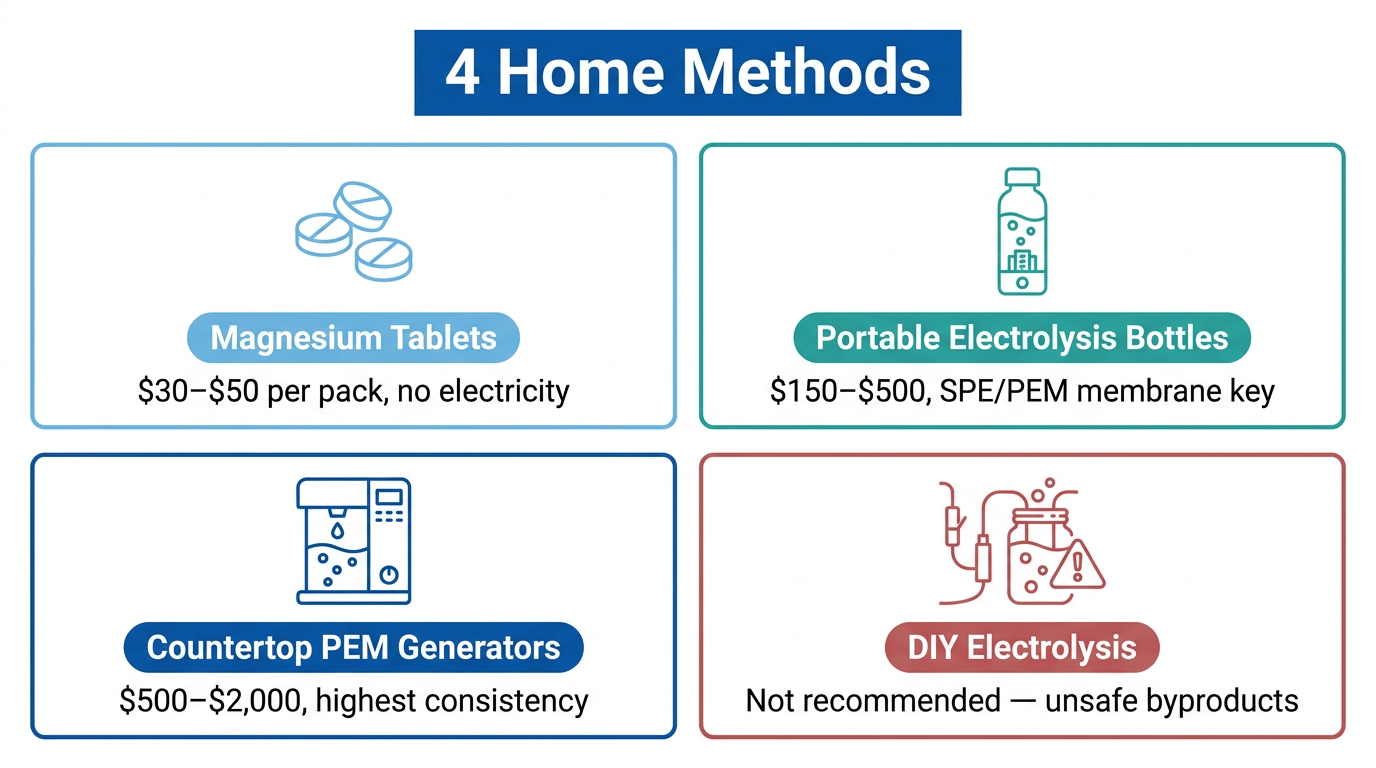
Each of the four methods below is evaluated on the same five criteria: cost, hydrogen output, filtration, safety considerations, and who it suits best. Understanding these trade-offs is the most practical way to figure out which approach fits your situation before spending anything.
Method 1: Hydrogen Tablets and Magnesium Sticks
Tablets and magnesium sticks work through a straightforward chemical reaction rather than electrolysis. When magnesium comes into contact with water, it reacts to release molecular hydrogen gas, which then dissolves into the liquid. No electricity, no device, and no special setup required.
Typical cost runs roughly $30–$50 per pack. That low upfront number is attractive, but the per-serving cost accumulates quickly for anyone using them multiple times daily — and that ongoing expense is the main long-term consideration with this method.
Hydrogen output is generally lower and less consistent between products and batches than any electrolysis-based method. This is a pattern reported broadly across products, not a finding tied to any single measurement.
There are a few things worth knowing before choosing this route:
- Tablets add magnesium to your water along with hydrogen, and magnesium compounds are well known to have a laxative effect at higher intakes.
- Anyone who is pregnant, nursing, or managing a kidney or heart condition should speak with a healthcare provider before adding a daily magnesium source.
- Tablets provide zero filtration — whatever is in your source water stays there.
You can find a fuller breakdown of the relevant safety considerations on the Hydrogen Water Safety site.
This method suits someone who wants to test whether they notice anything from hydrogen water before committing to a device investment.
Method 2: Portable Hydrogen Water Bottles (Electrolysis)
Portable hydrogen water bottles use a battery-powered electrode assembly inside the bottle to split water molecules through electrolysis. Hydrogen gas is infused directly into the water, while the oxygen is vented out through a separate port. The whole cycle takes a few minutes, and you drink the result immediately.
Typical cost ranges from roughly $150–$500, driven mostly by electrode quality and whether the device uses a genuine membrane. Hydrogen output is moderate and typically advertised lower than countertop units — and as with all home devices, those figures come from manufacturer specifications, not verified independent measurements.
The quality differentiator here is membrane design. Better units use platinum-coated titanium electrodes combined with a genuine SPE/PEM (Solid Polymer Electrolyte / Proton Exchange Membrane) design. Devices that lack proper membrane separation can produce unwanted byproducts such as ozone or chlorine compounds. A visible waste-gas vent is the most practical sign that a bottle’s design actually separates those byproducts from what you drink.
Portable bottles offer no meaningful filtration of source water contaminants. They suit travel, desk use, and anyone who wants hydrogen water at the specific point of drinking rather than from a central home system.
For a closer look at how specific models compare, see the portable hydrogen water bottle comparison on Hydrogen Water Safety, or read the breakdown of whether a hydrogen water bottle is worth it before deciding.
Method 3: Countertop Generators (PEM Electrolysis)
Countertop hydrogen water generators are the most technically sophisticated home option. They use PEM (Proton Exchange Membrane) electrolysis, which embeds the electrolyte directly in the membrane. That design separates hydrogen from oxygen and other electrode byproducts more cleanly than open-plate systems, and it is why PEM is considered the standard for consistent, high-purity output.
Typical cost runs from roughly $500–$2,000. The upfront price is the highest of the four methods, but the per-serving cost over time is the lowest for daily household users. Manufacturers commonly advertise hydrogen concentrations around 1.0–1.8 ppm, with some citing strongly negative ORP (Oxidation-Reduction Potential) readings. These are advertised specifications — treat them as such rather than as verified performance figures.
Some premium units add multi-stage filtration systems, with manufacturers claiming removal of a wide range of contaminants. Any specific contaminant count should be read as a manufacturer claim until reported by third-party testing.
One consumer warning worth stating plainly: “PEM” appears frequently in marketing copy for devices that do not actually use a true Proton Exchange Membrane. The acronym in a headline is not a guarantee of anything. Verify that the membrane design is described explicitly in the product specifications, not just implied by the label.
Countertop generators suit daily household use where consistent output and water filtration matter more than portability. See the countertop hydrogen water machine comparison on Hydrogen Water Safety for an evidence-tiered look at how specific units hold up.
Method 4: DIY Electrolysis — Why It Is Not Worth the Risk
Improvised electrolysis setups circulate online, typically involving household additives, common containers, and a makeshift current source. This section explains why those approaches are unsafe — not how to attempt them.
The core problems are layered:
- There is no control over electrode materials in an improvised setup, and substandard materials leach directly into the water being produced.
- There is no separation of hydrogen from other gases generated at the electrodes — including chlorine compounds, which can form depending on what dissolved substances are present in the water.
- There is no way to measure what was actually produced or whether the water is safe to drink.
Sealing molecular hydrogen in any improvised sealed container also introduces a pressure and flammability hazard that commercially manufactured devices are specifically engineered to vent safely. No improvised electrolysis setup can replicate those engineering controls.
The recommendation here is unambiguous: no DIY electrolysis method is appropriate for home use. One important distinction — commercially manufactured magnesium tablets are a completely different category, produced under manufacturing controls, and should not be grouped with improvised setups.
Comparing the 4 Methods Side by Side
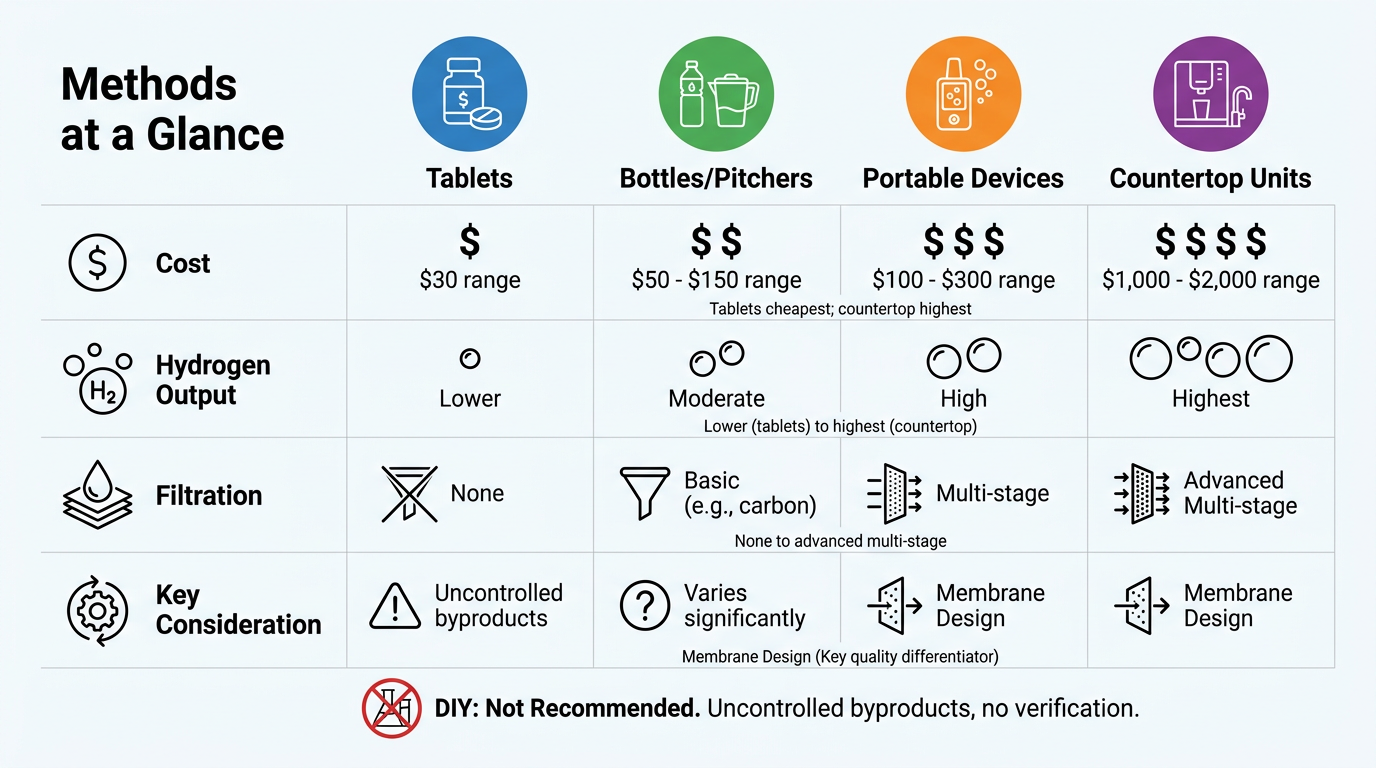
Cost and output figures below reflect manufacturer specifications and commonly reported ranges, not measurements performed by Hydrogen Water Safety.
| Method | Typical Cost | Hydrogen Output | Filtration | Key Consideration | Suits |
|---|---|---|---|---|---|
| Magnesium tablets | $30–$50 per pack | Lower, less consistent | None | Adds magnesium to your water | Trying it before investing |
| Portable bottles | $150–$500 | Moderate (advertised) | None to basic | Verify genuine SPE/PEM membrane | Travel and daily portable use |
| Countertop generators | $500–$2,000 | Highest (advertised) | Often advanced | “PEM” is used loosely in marketing | Daily household use |
| DIY electrolysis | Low | Unknown, unverifiable | None | Uncontrolled byproducts | Not recommended |
For a closer look at the two portable options, compare tablets with a hydrogen-generating bottle, including preparation volume, ongoing costs and care requirements.
The two criteria that actually separate good from bad within any category are membrane design and whether output claims are accompanied by stated test conditions. Price and convenience matter, but neither one confirms that a device does what it claims. The cheapest option in any category is rarely the one with a genuine membrane, and a premium price tag does not automatically mean a real PEM design either.
Keeping the Hydrogen You Just Made
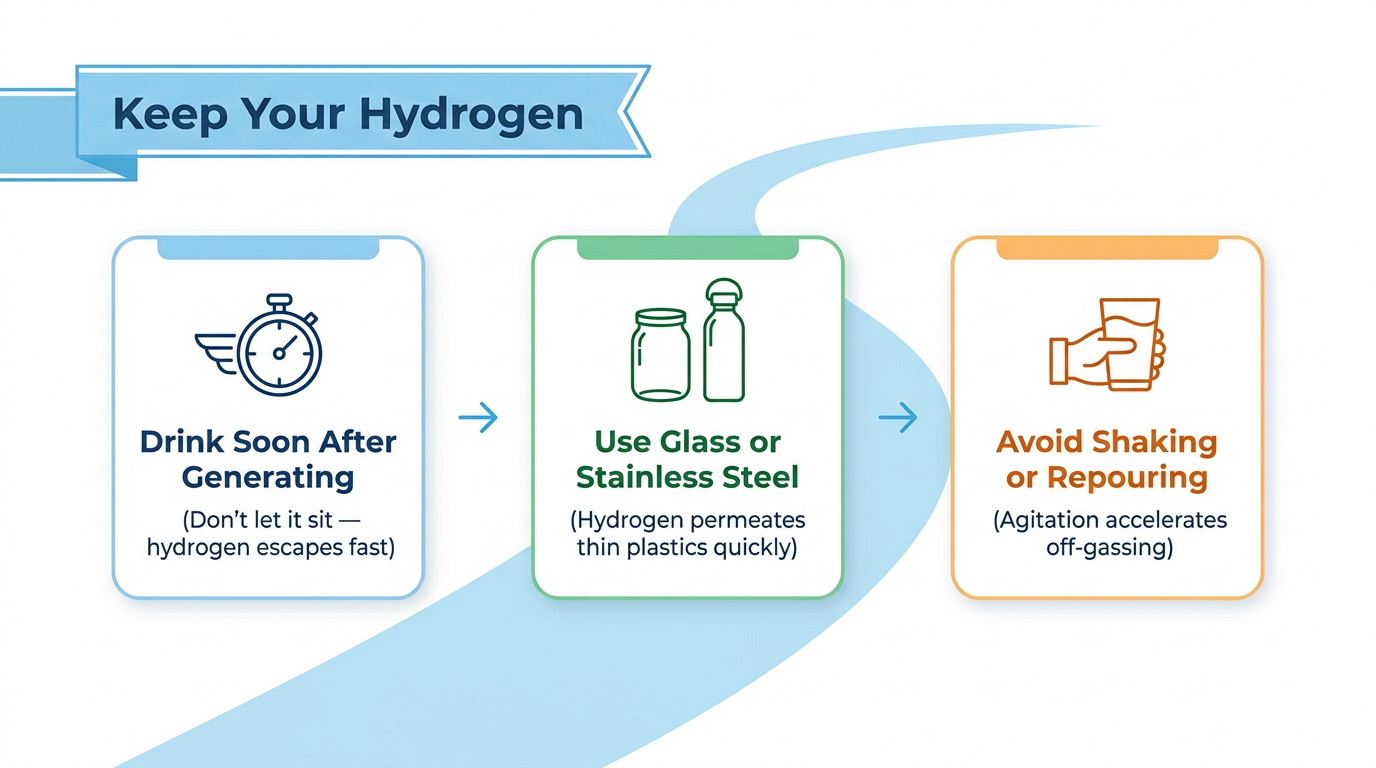
However you produce hydrogen water, what you do with it immediately afterward matters just as much. Dissolved hydrogen begins escaping into the air right away, so handling and storage directly affect how much of what you just made actually reaches you.
Three practical rules cover most of the risk:
- Drink it soon after generating — do not let it sit.
- Use glass or stainless steel rather than thin plastic; hydrogen molecules are small enough to permeate many plastics quickly.
- Avoid shaking or pouring between containers, which accelerates off-gassing.
For the full breakdown by container type and how long hydrogen water realistically lasts under different conditions, see the dedicated article on how long hydrogen water lasts.
One additional point on source water: cleaner input water supports more efficient electrolysis. If you are wondering how reverse osmosis and filtered water interact with home hydrogen production, that comparison is covered separately.
How to Judge a Device Before You Buy
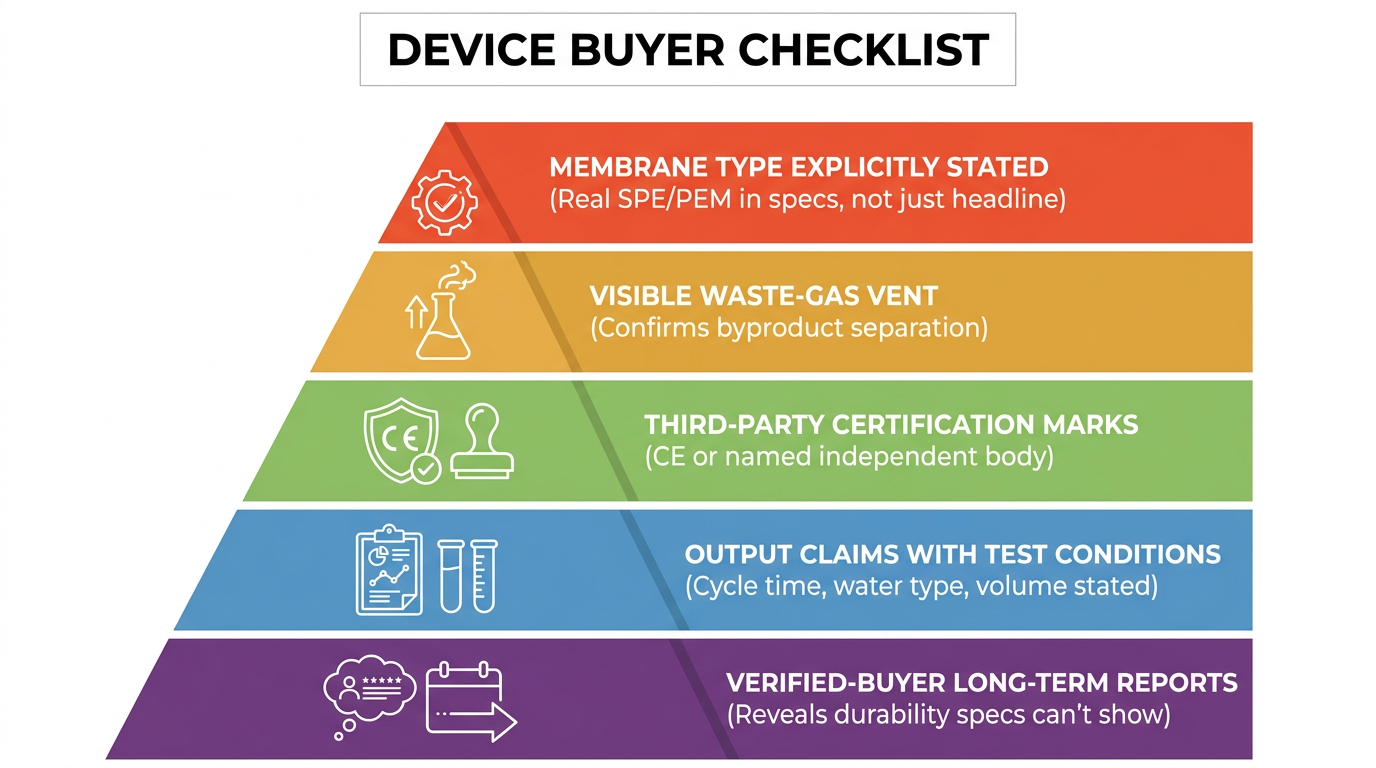
Most information about home hydrogen water production originates with manufacturers, distributors, or affiliate content. Performance figures tend to travel unverified from a spec sheet to a product page to a review, with no independent confirmation at any step. That structural problem is worth understanding before you start evaluating options.
Here is a concrete checklist of what to look for when assessing any device:
- Membrane type stated explicitly — a real SPE/PEM design should be described in the product specifications, not just referenced as an acronym in a marketing headline.
- A visible waste-gas vent on any electrolysis device, which indicates byproducts are separated from the water you drink rather than dissolved into it.
- Third-party or regulatory certification marks — such as CE or comparable independent certification — rather than self-declared “certified” language with no issuing body named.
- Output claims with stated test conditions — a ppm number with no cycle time, water type, or volume attached is not a meaningful figure. Treat it as a marketing number.
- Verified-buyer reports over months of use, which often reveal durability and output consistency that specifications simply do not capture.
Hydrogen Water Safety publishes evidence-tiered device reviews that apply these criteria across products, drawing on manufacturer specifications, published research, and verified-buyer reports. No manufacturer relationship influences what gets published.
The Bottom Line
There are four ways to make hydrogen water at home, and they differ far more in consistency and safety design than in whether they “work” in principle. Magnesium tablets offer a low-cost entry point with a meaningful magnesium trade-off. Portable electrolysis bottles suit convenience-first users who verify the membrane. Countertop PEM generators provide the highest consistency and often add filtration, at the highest upfront price. DIY electrolysis should be skipped entirely — uncontrolled byproducts and pressure risks make no improvised setup worth attempting.
Before any purchase, three things are worth confirming: genuine membrane design described in the specifications, output claims with stated test conditions, and independent certification marks from a named body. Compare hydrogen water generators using those criteria before committing.
If you go the tablet route, choose one whose label states its magnesium: that single number tells you both the maximum hydrogen the tablet can make and how much of your daily magnesium ceiling it uses. The Active H2 Ultra review shows the calculation on a tablet that publishes it.
Frequently Asked Questions
What is the safest way to make hydrogen water at home?
A commercially manufactured electrolysis device with a genuine SPE/PEM membrane and a visible waste-gas vent is the most controlled option. The design separates hydrogen from other electrode byproducts rather than dissolving them into what you drink. Look for certification marks from a named third party rather than self-declared claims before purchasing.
How many ppm of hydrogen should hydrogen water have?
Published research on molecular hydrogen typically works with concentrations in the low single-digit parts per million range. Manufacturer ppm claims vary widely and are rarely accompanied by stated test conditions, so treat any figure without cycle time, water type, and volume information as a marketing claim rather than a verified data point.
Can hydrogen tablets really produce hydrogen water?
Yes — magnesium tablets produce hydrogen through a genuine chemical reaction when dissolved in water. Output is generally lower and less consistent than electrolysis-based devices. Tablets also add magnesium to the water itself, which is worth considering if you are monitoring magnesium intake for any health reason.
Is DIY hydrogen water safe to make?
No. Improvised electrolysis offers no control over electrode materials, no separation of hydrogen from potentially harmful gas byproducts, and no way to verify what was actually produced. Sealing hydrogen in an improvised container also introduces a pressure hazard. Use a commercially manufactured device instead.
Are hydrogen water generators worth the cost?
For daily household use, a countertop generator carries the lowest per-serving cost over time and typically adds water filtration. Whether that justifies the $500–$2,000 upfront price depends on how consistently you will use it and whether the specific device’s membrane design and certification marks hold up to scrutiny.
Compare your options
Independent, research-based comparisons of hydrogen water products, ranked on published specifications and certifications rather than marketing claims:
- Best hydrogen water tablets — device-free, nothing to maintain
- Best hydrogen water bottles — portable SPE/PEM generators
- Best hydrogen water generators — countertop and higher-output machines
- Best hydrogen water pitchers — larger volume for household use