
Disclosure & evidence. As an Amazon Associate, Hydrogen Water Safety earns from qualifying purchases — at no extra cost to you, and with no influence on our verdict. No sponsored placements. Evidence: research-based manufacturer specification audit, third-party certification review, and a synthesis of published buyer reviews. We have not lab-tested these tablets. Testing protocol · Full disclosure.
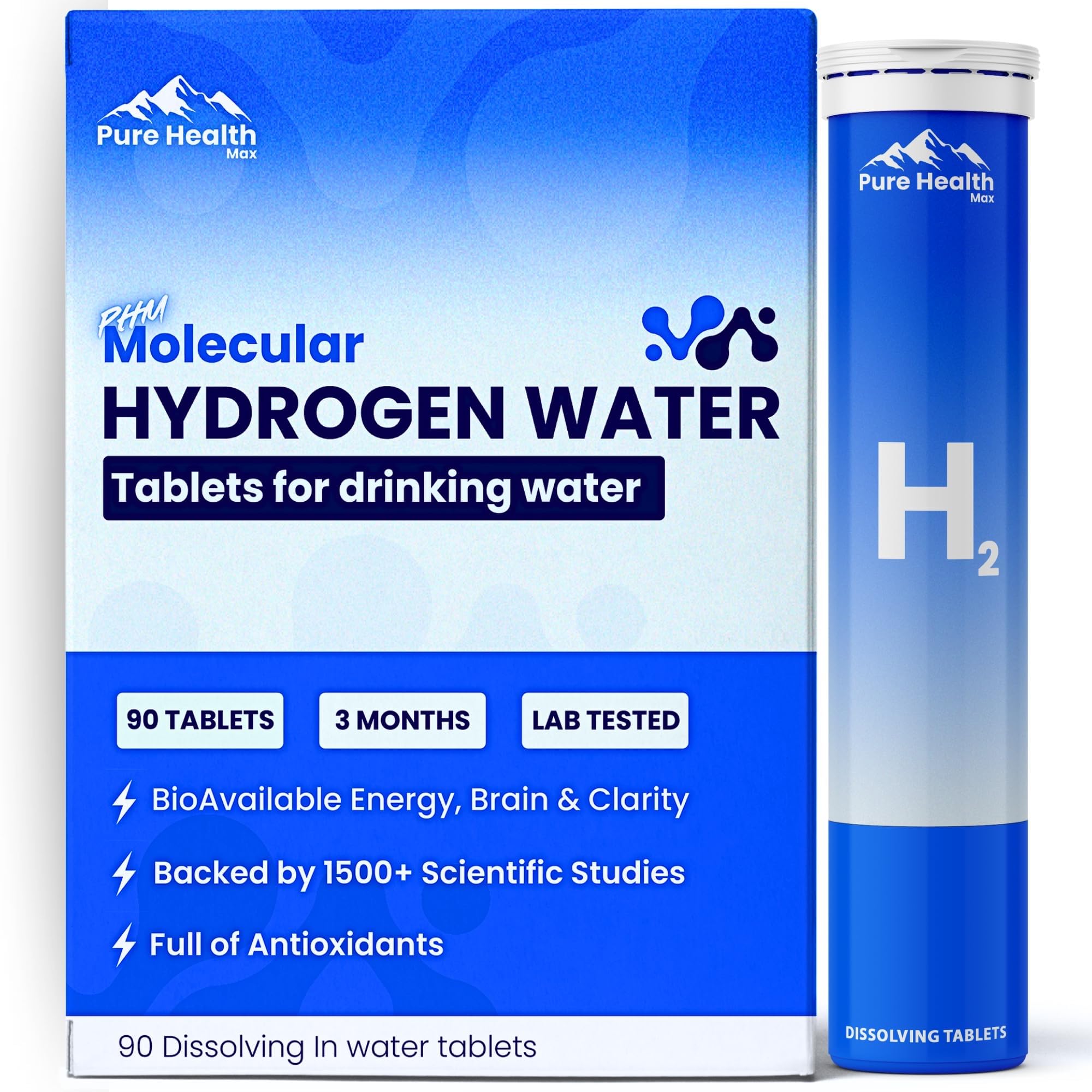
PHM Hydrogen Water Tablets
Verdict: PHM Hydrogen Water Tablets, sold on Amazon as PHM Hydrogen Water Tubes, are magnesium effervescent tablets, 90 to a tube, that release hydrogen gas when dropped into water. PHM gets the format right and the paperwork wrong. Tablets are claimed to deliver more dissolved hydrogen than bottles, and HWS has not measured what any tablet or bottle delivers. PHM does not publish any third-party certification of its hydrogen output, so you are trusting the label. The 90-tablet tube is the longest supply we found, and if supply length is what you are buying, this is the one.
Best for: buyers who want the longest run between reorders and are comfortable with a manufacturer-stated output figure.
How tablets differ from bottles.
Bottles advertise 5–8 PPM under test conditions most brands do not publish, while water at ordinary pressure holds roughly 1.6 mg/L of dissolved hydrogen at equilibrium. HWS has not measured what any bottle delivers. We assumed tablets were the same story with different packaging.
Not exactly. Tablets do not electrolyse — they chemically generate hydrogen (magnesium + acid), and a freshly reacting tablet can briefly exceed that equilibrium figure. Drink HRW‘s 12.4 PPM is attributed by the brand to H2 Analytics (IHSA); we have not verified the matching report. HWS has not measured what any tablet or bottle delivers in the glass.
Where that leaves PHM: it has the format advantage. It does not have the certification. See how it stacks up in our best hydrogen water tablets comparison.
Pros and Cons
What works
- 90 tablets — the longest supply per tube in this category; roughly three months at one a day
- Tablets are claimed to deliver more dissolved hydrogen than bottles — HWS has not measured either format
- No device, no electricity, no electrode cleaning, no membrane to foul
- No ozone or chlorine risk — the failure mode that plagues cheap electrolysis bottles simply does not exist here
- Delivers magnesium alongside the hydrogen — a benefit if you need it
- Fits in a gym bag, a travel kit, a desk drawer
What does not
- No third-party certification of hydrogen output. Unlike Drink HRW, PHM publishes no named-lab verification — you are trusting the label
- The magnesium is the real risk, not the hydrogen — GI upset is the most common complaint across every brand
- Recurring cost — tablets are consumed, a bottle is bought once
- No output control; fixed dose per tablet
- Preparation must follow the bottle label; do not improvise a sealed container (see below)
- Evidence limit — Hydrogen Water Safety has not measured this product
The Output Question: What PHM Does and Doesn’t Prove
What we assumed
“Tablets claim 8–16 PPM. Bottles claim 5–8 PPM. Both are inflated numbers that collapse the moment you drink them.”
What the evidence shows
Half right. Bottle claims sit far above equilibrium — water at ordinary pressure holds roughly 1.6 mg/L, and most brands do not publish the test conditions behind their figure. Tablets can briefly exceed that figure, but each brand’s figure still needs its own evidence. Drink HRW cites IHSA certification for 12.4 PPM; we have not verified the matching report. PHM’s figure is not certified by anyone.
Where PHM sits — and where a certification-cited figure sits
Brand-cited and manufacturer-stated figures, against the roughly 1.6 mg/L equilibrium solubility of hydrogen in water at ordinary pressure.
Read this chart carefully. The point is not that PHM is weak — the tablet format may well exceed equilibrium solubility briefly. The point is that PHM is the only bar here nobody outside the company has checked. In a category where marketing figures are routinely inflated, the distinction between a certified number and a claimed one is the entire decision. Our PrimeCell H2 review walks through one current example. Hydrogen Water Safety has not measured PHM’s output either.
⚠️ Preparation: follow the label
- Follow the preparation directions printed on your bottle. Do not improvise a sealed-container preparation: a tablet that is generating gas can build pressure in a closed vessel. Use only a vessel and procedure the manufacturer specifies, and HWS has not verified that PHM specifies a capped container.
- Drink promptly once it finishes dissolving.
- Use the amount of water the label specifies. More water means a lower concentration.
- Cold water slows dissolution. If yours is fizzing sluggishly, that is why.
Specifications
| Specification | PHM claim |
|---|---|
| Format | Effervescent magnesium tablet (tube) |
| Count / supply | 90 tablets — approx. 3 months at 1/day |
| Hydrogen output | Manufacturer-claimed — no named third-party certifier |
| Active mechanism | Elemental magnesium + organic acids → H₂ gas |
| Serving | 1 tablet in water per the bottle label; drink promptly once dissolved |
| Free from | Chlorine, ozone, artificial additives; vegan, gluten-free, soy-free (manufacturer claim) |
| Device required | None — no electricity, no maintenance |
How PHM Tablets Work
The chemistry is simple and worth understanding, because it explains why tablets behave differently from bottles. Elemental magnesium reacts with water to release hydrogen gas; organic acids in the tablet accelerate the reaction, producing visible bubbles within a minute or two.
That reaction is fast and vigorous. A freshly reacting tablet can briefly exceed the roughly 1.6 mg/L equilibrium solubility at ordinary pressure; HWS has not measured what any tablet or bottle delivers. Follow the preparation directions on your label.
There is a second, quieter advantage. Electrolysis splits water into hydrogen and oxygen, and in a poorly-built bottle the byproducts — ozone, chlorine — can end up in your drinking water. That is the central safety failure of cheap electrolysis devices, and we cover it in our ozone gas warning. Magnesium tablets produce no such byproducts. The same applies to the Gary Brecka hydrogen tablets and every other effervescent format. Whatever else is true of PHM, that risk simply is not present.
What Buyers Report
Themes that recur in published Amazon buyer reviews of magnesium hydrogen tablets; we did not count a sample, so read them as themes, not statistics. These are buyer reports, not measurements taken by Hydrogen Water Safety — no percentages, no invented counts, no concentration figures we have not seen certified.
Recurring positives
- Convenience dominates the positive feedback. Drop, wait, drink. No setup, no learning curve, nothing to charge or clean.
- Travel use is the recurring theme — gym bags, flights, office drawers. The tube goes where a bottle cannot.
- Some buyers report perceived improvements in energy and post-workout recovery. These are self-reported impressions, not measured outcomes.
- Taste is generally described as neutral to faintly mineral.
Recurring complaints
- Magnesium-related GI looseness. The most consistent complaint, and entirely expected — magnesium has a well-known osmotic effect. Dose-dependent. Start with one tablet, not two.
- Cost versus perceived benefit. Buyers question whether a recurring consumable beats a one-time device purchase. It is a fair question, and the answer depends on how often you actually drink it.
- Slow or incomplete dissolution, usually traced to cold water or impatience.
- No noticeable effect for a subset of buyers — which may reflect individual variation, or expectations set by marketing.
The Real Safety Issue Is Magnesium, Not Hydrogen
In tablet products, the safety variable is the magnesium, not the hydrogen. The mineral is the limiter, not the gas.
Every PHM tablet is also a magnesium supplement, whether you wanted one or not — that is the mechanism. Take two a day, add a magnesium supplement you already take, eat a magnesium-rich diet, and you can quietly stack past your tolerance without ever intending to.
⚠️ Talk to a doctor before daily use if you
- Have kidney disease or impaired renal function. Damaged kidneys cannot clear excess magnesium efficiently, which raises the risk of hypermagnesemia. This is the single most important contraindication in this category.
- Are pregnant or nursing.
- Take antibiotics, thyroid medication, or bisphosphonates. Magnesium can interfere with absorption of all three. Timing and spacing matter.
- Already take a magnesium supplement. Count the tablets toward your daily total, not on top of it.
The common, mild version: loose stools or GI upset — dose-dependent, and the most frequent complaint across every tablet brand. See our medical disclaimer and side effects guide.
PHM Tablets vs a Hydrogen Water Bottle
| Criterion | Tablets (PHM) | Bottles & generators |
|---|---|---|
| Hydrogen actually delivered | Claimed higher — a freshly reacting tablet can briefly exceed ~1.6 mg/L; HWS has not measured it | Advertised 5–8 PPM, above the ~1.6 mg/L equilibrium; HWS has not measured delivery |
| Output verification | Manufacturer-claimed only | Some bottles carry named third-party certification |
| Cost over years | Recurring — consumed | One-time purchase |
| Portability | Fits any bag; no power needed | Bottles portable; generators are not |
| Maintenance | None | Electrode cleaning, membrane care, descaling |
| Ozone / byproduct risk | None — no electrolysis | Real risk in cheap units without proper gas separation |
| Magnesium load | Unavoidable — a benefit or a contraindication | None |
The honest split. Tablets for travel, for a claimed higher dose per serving, and for anyone who does not want to own hardware. A bottle for daily long-term use, for cost-per-litre, and — importantly — for anyone who should not be adding magnesium. The one bottle we own and have handled is the Piurify; see also our best hydrogen water bottles and hydrogen water machines guides.
Who Should Buy PHM — and Who Should Not
Buy PHM if
- Supply length is what you are optimising for — 90 tablets is the longest run per tube we found.
- You travel, or you simply do not want to own and maintain a device.
- You want the tablet format, which is claimed to deliver more hydrogen per serving, and accept a manufacturer-stated figure.
- You want magnesium alongside the hydrogen.
Buy a certified tablet instead if
- Independent verification is your deciding factor. Drink HRW cites IHSA certification for its output (we have not verified the matching report); PHM cites none. See our tablets comparison.
Skip tablets entirely if
- You have kidney disease or impaired renal function and have not spoken to a doctor.
- You are pregnant or nursing without medical guidance.
- You are sensitive to supplemental magnesium, or already take it.
- You drink hydrogen water daily and long-term — a device is far cheaper per litre.
For a tablet at the other end of the disclosure scale — magnesium stated on the label, hydrogen claim checkable against it by stoichiometry — see the Active H2 Ultra review. Comparing the two labels side by side is the fastest way to see what a buyer should expect a tablet to publish.
Frequently Asked Questions
Are PHM Hydrogen Water Tablets legit, or a scam?
Legitimate. The magnesium-and-acid reaction that produces hydrogen is well-established chemistry, and tablets are claimed to deliver more dissolved hydrogen than an electrolysis bottle. The fair criticism is not that PHM is fake — it is that PHM publishes no named third-party certification of its output, unlike Drink HRW, which cites IHSA certification for its 12.4 PPM. You are trusting the label. Hydrogen Water Safety has not measured PHM either.
How much hydrogen do PHM tablets actually produce?
PHM states a figure; no outside lab has published a verification of it, and Hydrogen Water Safety has not measured it. What we can say about the format: at ordinary pressure, water holds roughly 1.6 mg/L of dissolved hydrogen at equilibrium, and a freshly reacting tablet can briefly exceed that. The most-cited figure in this category is Drink HRW’s 12.4 PPM per 500 ml, which the brand attributes to H2 Analytics of the IHSA; we have not verified the matching report. PHM publishes no named third-party output certification, so its figure remains a manufacturer claim.
Do I have to use a sealed bottle?
Follow the directions on your bottle’s label. Do not improvise a sealed-container preparation: a tablet that is generating gas can build pressure in a closed vessel. Use only a vessel and procedure the manufacturer specifies, and drink promptly once it has dissolved. HWS has not measured how much hydrogen stays in the water.
Are PHM tablets safe to take every day?
For most healthy adults, one tablet a day sits within normal magnesium supplementation ranges. The hydrogen is not the concern — the magnesium is. Loose stools and GI upset are the common, dose-dependent complaint. Anyone with kidney disease or impaired renal function should not take these without medical clearance, because damaged kidneys cannot clear excess magnesium efficiently. The same applies during pregnancy or nursing, and if you take antibiotics, thyroid medication, or bisphosphonates.
PHM tablets or a hydrogen water bottle — which is better?
For hydrogen dose per serving, tablets are the format claimed to deliver more, because a freshly reacting tablet can briefly exceed the roughly 1.6 mg/L equilibrium solubility; HWS has not measured either format. For cost over years of daily use, a bottle — it is a one-time purchase and tablets are consumed. And tablets add a magnesium load that bottles do not, which is decisive if you have kidney concerns. Tablets for travel and dose; a bottle for daily long-term use.
How long does the hydrogen last after the tablet dissolves?
Drink it promptly. Concentration is highest right after the tablet finishes reacting and falls from there. Water left standing open loses most of its dissolved hydrogen quickly, no matter how high the starting figure was.
Do PHM tablets contain magnesium?
Yes — magnesium is the active ingredient. Elemental magnesium reacting with acid is the mechanism that produces the hydrogen, so every tablet is also a magnesium supplement whether or not you wanted one. Count it toward your daily total rather than on top of it, especially if you already supplement magnesium.
Final Verdict
PHM gets the format right and the paperwork wrong. Tablets are claimed to deliver more dissolved hydrogen per serving than bottles; HWS has not measured what any tablet or bottle delivers, so treat that as a claim, not a finding. Ninety tablets to a tube is the longest supply we found, there is no device to maintain, and there is no ozone risk at all.
What it does not have is verification. Drink HRW cites IHSA certification for its 12.4 PPM output; PHM cites nothing comparable. In a category where headline figures are routinely inflated, that gap is the whole decision — and it is the reason PHM is not our top pick.
Buy PHM if supply length is what you are paying for. Buy the certified alternative if independent verification is. And whichever you buy, follow the preparation directions on its label and do not improvise a sealed-container method. The magnesium is the part with the actual contraindications, so read that section before the first tablet.
This review is based on research and analysis of manufacturer specifications, third-party certification documents, and published buyer reviews. Hydrogen Water Safety does not own this product and has not lab-tested it. As an Amazon Associate, Hydrogen Water Safety earns from qualifying purchases.
See how PHM compares against every other tablet on the market in our best hydrogen water tablets guide. For the device side, see our best hydrogen water bottles and generators and machines comparisons, or browse all of our hydrogen water reviews.
Last update on 2026-10-23 / Affiliate links / Images from Amazon Product Advertising API
This product presentation was made with AAWP plugin.