What Is H3O Water? Real Science vs Marketing Claims
H3O water is not a distinct kind of water. H3O⁺ (hydronium) is the ion every water sample already contains, and it is what the pH scale measures. So “H3O water” is either ordinary water with a chemistry-sounding label or hydrogen (H2) water renamed. Premium-priced products claim improved hydration, pH balance, and energy; none of those follow from hydronium.
H3O⁺ (hydronium ion) is a real chemical species that exists in every water sample at trace levels — approximately 1 in 555 million water molecules at neutral pH. It disappears within picoseconds as protons hop between water molecules. It cannot be concentrated, “enhanced,” or bottled without making the water acidic. Products labeled “H3O water” contain either ordinary filtered water or rebranded molecular hydrogen (H2) water that exploits the chemistry-name confusion.
This guide covers what hydronium ion actually is in chemistry textbook terms, why it cannot be stored as a beverage enhancement, what “H3O water” products typically contain, the marketing red flags to recognize, and which alternatives have actual research behind them.
Short answer: H3O+ is the hydronium ion — an ordinary water molecule that has gained one extra proton. It forms in any water containing acid, and its concentration is what the pH scale measures. It is not a manufactured product, not a bottled form of water you can buy, and not related to the molecular hydrogen (H2) that hydrogen water devices dissolve into water.
What H3O⁺ (Hydronium Ion) Actually Is
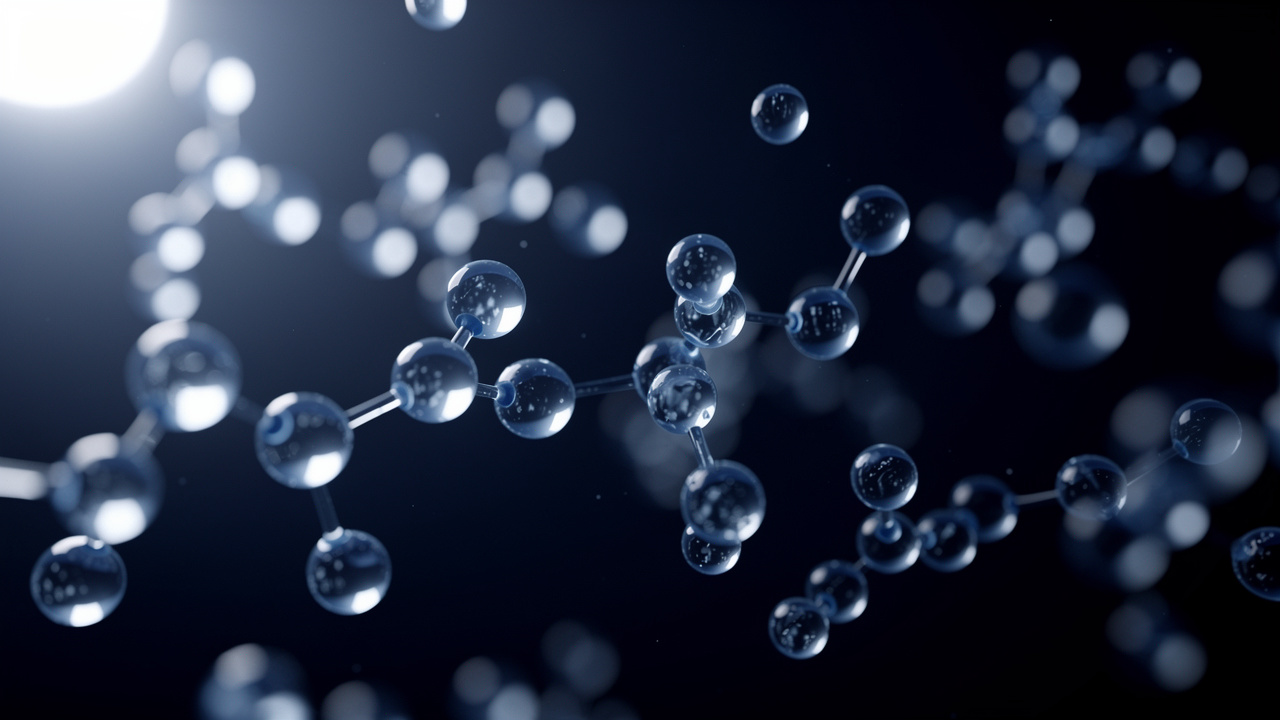
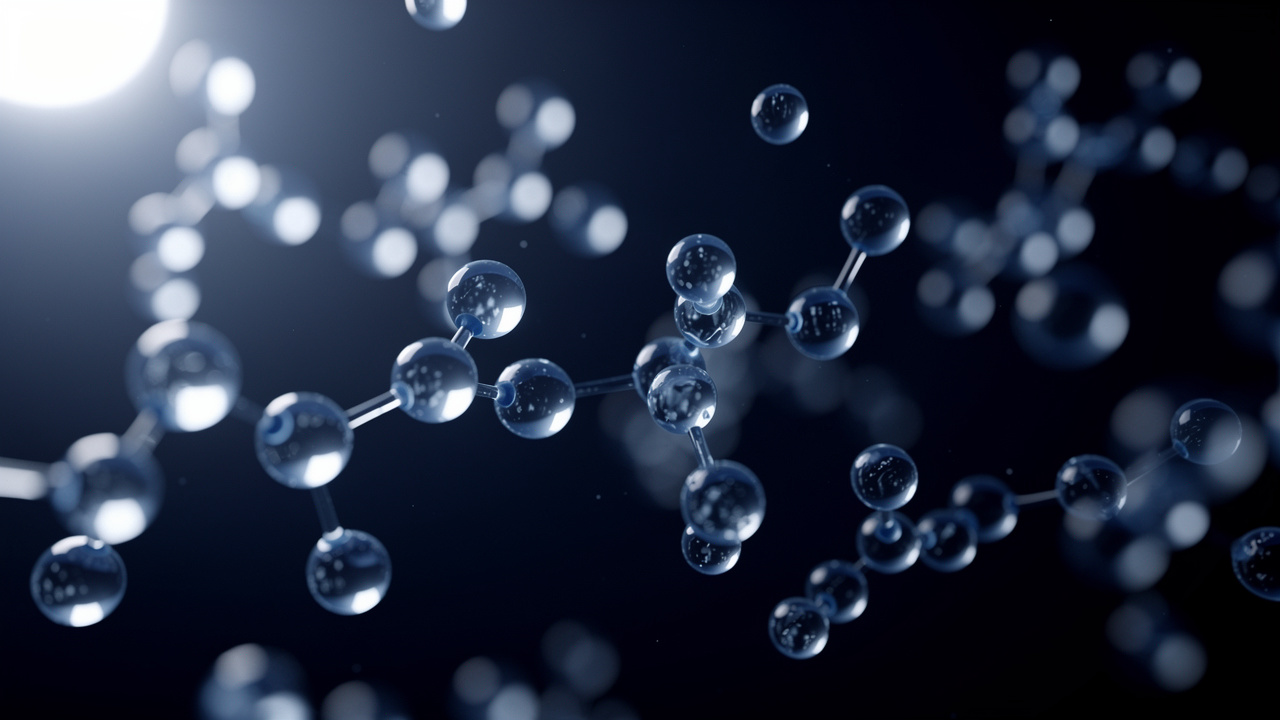
Hydronium ion is what forms when a water molecule gains an extra proton from another water molecule. It is the chemically meaningful form of “acid” in water — there is no naked H⁺ floating in solution. The modern autoionization equation shows this: 2 H₂O ⇌ H₃O⁺ + OH⁻. Two water molecules briefly transfer a proton, producing one hydronium ion and one hydroxide ion. This happens spontaneously and continuously in all water.
At neutral pH (7.0), the concentration of H₃O⁺ equals 10⁻⁷ moles per liter. Meanwhile, the concentration of H₂O is approximately 55.5 moles per liter. The ratio works out to approximately 1 hydronium ion per 555 million water molecules. This is the natural baseline for any neutral water — tap, distilled, reverse osmosis, “H3O water,” or otherwise.
Individual hydronium ions exist for picoseconds (trillionths of a second). The proton hops continuously between water molecules through the Grotthuss mechanism. What we measure as “the hydronium ion” is a statistical population, not a stable molecule. You cannot isolate a single hydronium ion and watch it sit still.
The pH scale directly measures hydronium concentration. Lower pH means more hydronium, which means more acidic. pH 7 is neutral. Lemon juice (pH 2) has 100,000 times more hydronium than neutral water. Bleach (pH 12) has 100,000 times less. The pH number is simply the negative logarithm of the hydronium concentration.
Hydronium is fundamental textbook chemistry, not a proprietary water enhancement.
Hydronium is foundational chemistry taught in every general chemistry course. For a broader look at how hydrogen-related water claims are evaluated, see our hydrogen water science overview.
This section synthesizes standard chemistry textbook material and peer-reviewed research on proton transfer in water. We have not lab-tested bottled water products labeled “H3O water.”
Why H3O⁺ Cannot Be Stored, Bottled, or “Enhanced”
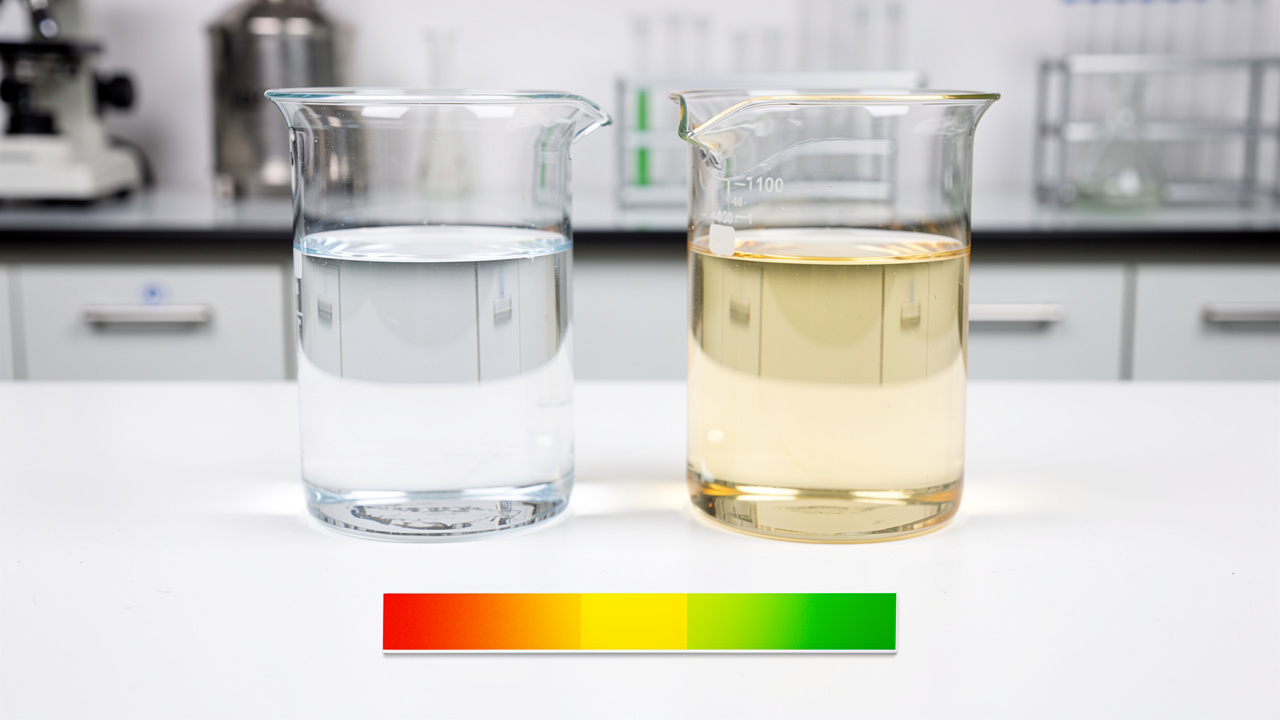
If hydronium exists in all water, why can’t it be “enhanced”? Two reasons, both rooted in chemistry.
Reason 1: Hydronium Is a Fleeting State, Not a Stable Molecule
Each hydronium ion exists for picoseconds before the proton hops to a neighboring water molecule. There is no stable form of hydronium that can be packaged, shipped, or stored. The proton transfer is too fast to be captured in a bottle. The moment you “create” a hydronium ion, it has already transferred its proton to another water molecule and ceased to exist as H₃O⁺.
Reason 2: Concentrated Hydronium Is an Acid
Hydrochloric acid, sulfuric acid, and nitric acid in solution are defined by their hydronium concentrations. Concentrated HCl at pH 0 has 10 million times more hydronium than neutral water. That is not “enhanced wellness water” — that would be corrosive and unsafe to drink. Any attempt to bottle water with elevated hydronium concentration is, by definition, an attempt to bottle acid.
The logical consequence is clear: there is no chemistry — proprietary or otherwise — that elevates hydronium concentration without elevating acidity. The pH scale is a direct logarithm of hydronium concentration. Lower pH means more hydronium AND more acid. They are the same number viewed from different angles.
We have not tested any “H3O water” product ourselves. But the chemistry sets the limit: a drinkable, neutral-pH water cannot hold extra hydronium, so any such product should measure as ordinary water at pH around 7. If a seller publishes no measurable specification showing otherwise, the “enhancement” exists on the label, not in the bottle.
There is no plausible reading of physics or chemistry under which a stable, drinkable, neutral-pH “enhanced H3O⁺” water exists. The marketing premise contradicts the chemistry it cites.
What “H3O Water” Products Actually Contain
If “H3O water” cannot deliver enhanced hydronium, what is in the bottle?
Category 1: Plain Filtered Water With a Marketing Label
Many “H3O water” brands are tap-source water that has been filtered, bottled, and labeled with chemistry-sounding language. Standard chemistry tests show ordinary water at neutral pH. The price difference covers branding, not chemistry. You are paying for the label design and the implication of scientific advancement, not for any measurable chemical difference from the water that comes out of your kitchen faucet.
Category 2: Rebranded Molecular Hydrogen (H2) Water
Some products marketed as “H3O” actually contain dissolved molecular hydrogen gas (H2). This exploits consumer confusion between H3O⁺ (hydronium ion) and H2 (molecular hydrogen). They are completely different chemical species:
- H3O⁺ is a charged ion that determines pH. It cannot be concentrated as a beverage enhancement.
- H2 is a neutral diatomic gas that dissolves in water at limited concentrations (saturation around 1.6 ppm at standard temperature and pressure). It has hundreds of peer-reviewed studies indexed in PubMed on antioxidant and therapeutic applications.
Why the confusion is profitable: legitimate hydrogen water research is about H2, not H3O⁺. Marketing as “H3O” rides on the credibility of H2 research while sounding more chemistry-fancy. Consumers searching for hydrogen water benefits may land on “H3O water” products and assume they are getting the same thing.
The Regulatory Gap
The FDA has not formally regulated terms like “structured water,” “energized water,” or “H3O water.” This regulatory gap permits implied wellness claims without triggering the scrutiny that “medicinal” or “cure” claims would attract. Vague water terminology operates in regulatory whitespace, not in chemistry advancement.
Our published testing protocol covers hydrogen water generators, where dissolved H2 is measurable in ppb. There is no measurable “enhanced H3O⁺” specification to test for, because the underlying chemistry does not permit one.
Red Flags and What to Buy Instead
Marketing Red Flags: 5 Specific Patterns
Red Flag 1: Vague Pseudoscientific Terminology
Watch for phrases like “hexagonal water,” “micro-clustered water,” “exclusion zone water,” “vibrationally charged,” “structured water,” or “memory water.” These borrow chemistry vocabulary but apply it in ways that contradict standard chemistry. Water at room temperature does not maintain stable cluster structures over the timescales these claims imply. The hydrogen bonds between water molecules break and reform trillions of times per second.
Red Flag 2: Premium Pricing Without Measurable Specifications
Products at substantially higher cost than filtered water but with no measurable specification (in ppm, ppb, mg/L, or any chemistry-standard unit) distinguishing the water from ordinary filtered tap water. If a product cannot tell you what makes it different in measurable terms, it probably is not different.
Red Flag 3: Proprietary Technology That Cannot Be Explained in Standard Chemistry Terms
Legitimate water treatment uses electrolysis, reverse osmosis, ion exchange, distillation, or filtration — all explainable in textbook chemistry. If a product’s “technology” requires you to take the company’s word for what it does, the technology probably does not exist. Real chemistry can be explained. Fake chemistry hides behind proprietary secrecy.
Red Flag 4: Health Claims Without Peer-Reviewed Support
Claims about pH balance, detoxification, cellular hydration, or energy that do not cite peer-reviewed studies (with verifiable DOIs or PubMed IDs). Citations to non-existent journals or to the company’s own “research” do not count. If a study is real, you can find it on PubMed. If you cannot find it, it is not real.
Red Flag 5: Marketing Language That Ignores Basic Physiology
Your stomach is at pH 1–2, strongly acidic. Whatever pH you drink at gets neutralized within seconds of swallowing. “Alkaline water for your alkaline body” contradicts how digestion actually works. The body maintains blood pH at 7.4 through sophisticated buffer systems involving the kidneys and lungs. Drinking water does not change that.
What to Buy Instead
For Everyday Hydration
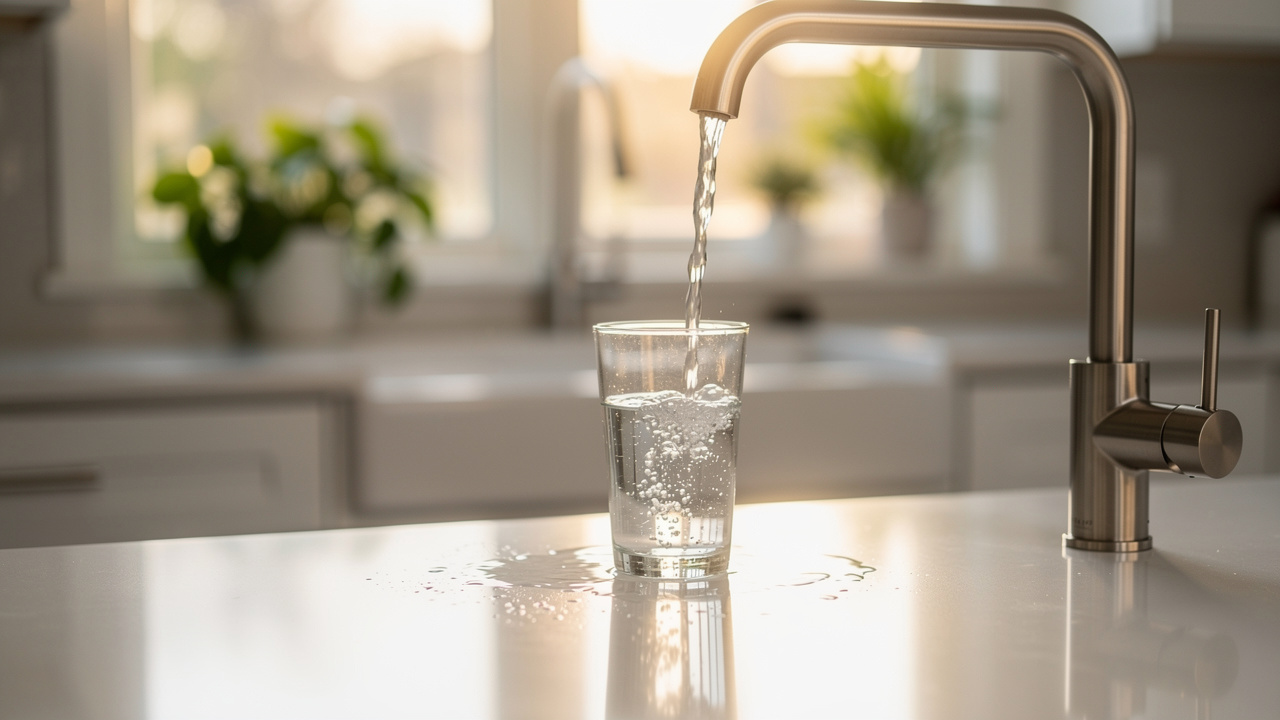
Clean filtered tap water meets the vast majority of hydration needs at a fraction of premium-water prices. The biggest hydration improvements come from drinking enough water, not from “enhanced” water. If your tap water tastes fine and your local water quality report shows acceptable contaminant levels, you do not need to spend more.
For Molecular Hydrogen (H2) Interest
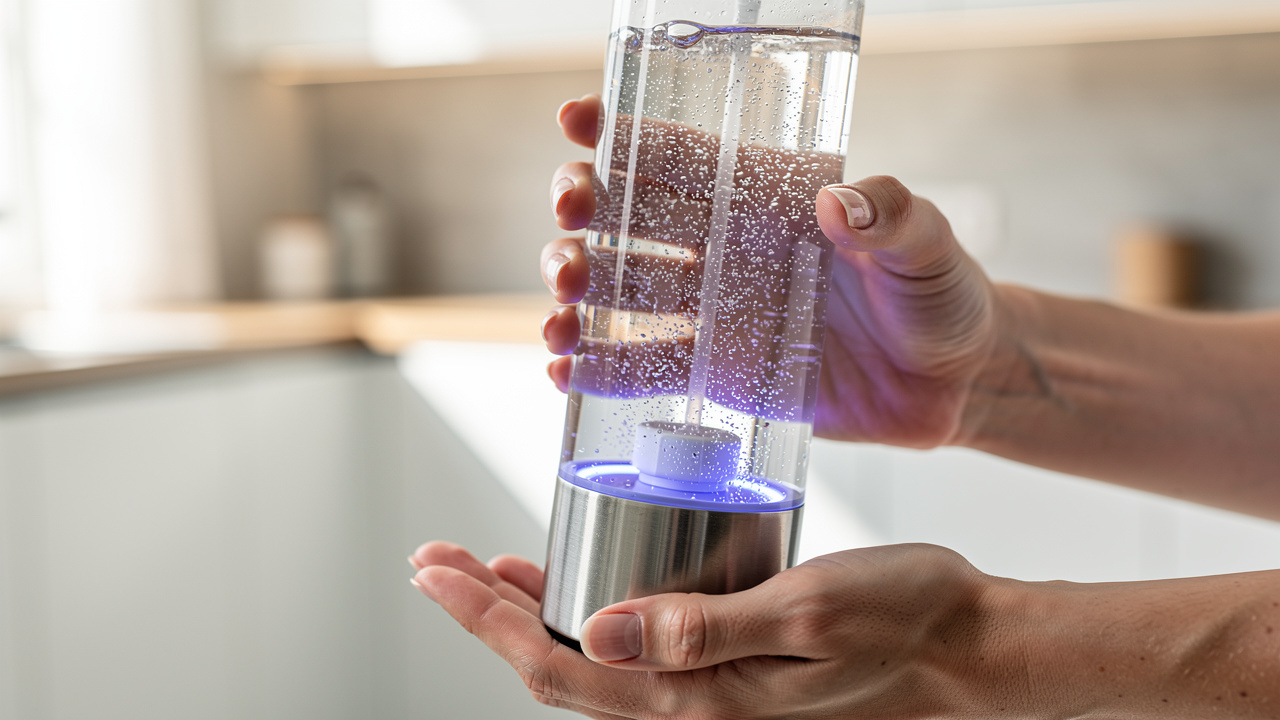
Look for devices using PEM (Proton Exchange Membrane) electrolysis with measurable H2 output in ppb or ppm, independent testing documentation, and citations with verifiable DOIs. See our verified hydrogen water bottle comparison for devices that meet these standards.
For Research Validation
Search PubMed for “molecular hydrogen” or specific conditions of interest. The clinical literature on H2 is growing — separate from the H3O⁺ marketing literature, which does not exist. Real research uses real chemical names and real measurements.
The Bottom Line
H3O⁺ (hydronium) is real, foundational chemistry. It exists in every glass of water at trace concentrations, governs pH, and disappears within picoseconds of forming. It cannot be bottled, enhanced, concentrated, or sold as a beverage in any way the underlying chemistry permits.
Products marketed as “H3O water” are either plain water with a chemistry-sounding label or rebranded hydrogen (H2) water that exploits consumer confusion between hydronium ion and molecular hydrogen. Neither delivers “enhanced hydronium” — because that is not a thing chemistry allows.
For the cheapest hydration: filtered tap water. For the most-researched water enhancement: molecular hydrogen (H2) water from a device with measurable specifications. If you see “H3O water,” “structured water,” or any of the red-flag terminology in this guide, treat the price tag as the cost of the marketing, not of the chemistry.
For published specifications and verified-buyer review patterns on legitimate hydrogen water devices, see our hydrogen water bottle comparison.
If you came here comparing products rather than chemistry: the research is about molecular hydrogen (H2), not H3O. The two formats with the most verified-buyer data are covered in our best hydrogen water tablets comparison and the Gary Brecka hydrogen water bottle review.
Frequently Asked Questions
Is H3O water safe to drink?
Yes, but for the wrong reason. The natural hydronium ion concentration in any water at neutral pH is harmless. “H3O water” products are safe because they contain ordinary water — not because they contain elevated hydronium. The risk is financial (paying premium prices for ordinary water), not physical.
What is the difference between H3O water and hydrogen water?
H3O⁺ (hydronium) is a charged ion that determines pH and exists in all water at trace concentration. H2 (molecular hydrogen) is a neutral dissolved gas with hundreds of peer-reviewed studies indexed in PubMed on antioxidant effects. H3O⁺ cannot be measured or enhanced as a wellness specification; H2 can be measured in ppm or ppb. Many “H3O water” products are actually hydrogen water rebranded with a chemistry-confused label.
Can H3O water improve hydration better than regular water?
No. Water absorption is governed by osmosis, aquaporin channels, and electrolyte balance — none of which depend on hydronium concentration. All water at neutral pH contains identical hydronium concentrations. Hydration improvements that matter come from drinking enough water and choosing clean sources, not from pseudoscientific “enhancements.”
How can I verify if a hydrogen water product is legitimate?
Look for measurable H2 output in ppb or ppm. Verify the device uses PEM (Proton Exchange Membrane) electrolysis. Check for independent testing documentation with photos and methodology. Avoid products making cure or treatment claims. Confirm any cited studies have verifiable DOIs or PubMed IDs.
Does the FDA regulate H3O water products?
Not directly. The FDA does not regulate water marketing terms like “H3O,” “structured,” “energized,” or “hexagonal” — these are not defined regulatory categories. Hydrogen water generators are not FDA-approved medical devices. Companies operate in this regulatory gap to make implied wellness claims. Consumer caution depends on chemistry literacy and independent verification, not regulatory protection.
Compare your options
Independent comparisons of hydrogen water products, ranked on published specifications and certifications rather than marketing claims:
- Best hydrogen water tablets — device-free, nothing to maintain
- Best hydrogen water bottles — portable SPE/PEM generators
- Best hydrogen water generators — countertop and higher-output machines
- Best hydrogen water pitchers — larger volume for household use