
Affiliate disclosure: As an Amazon Associate, Hydrogen Water Safety earns from qualifying purchases. Commissions do not affect which products we recommend or how we describe them. We do not accept sponsored reviews, free units, or paid editorial placement from any brand mentioned here. Health disclaimer: Molecular hydrogen supplements are wellness products, not medical treatments. They do not diagnose, treat, cure, or prevent any disease. If you have kidney disease, are pregnant or nursing, or take prescription medication, speak with your doctor before adding a daily magnesium supplement to your routine.
Alexander See, Independent Hydrogen Water Researcher · Last updated August 2026 · This review is research-based. Hydrogen Water Safety does not own or test this product. Figures come from the product label, published materials, and verified-buyer reviews, and each is attributed to its source.
Short Answer
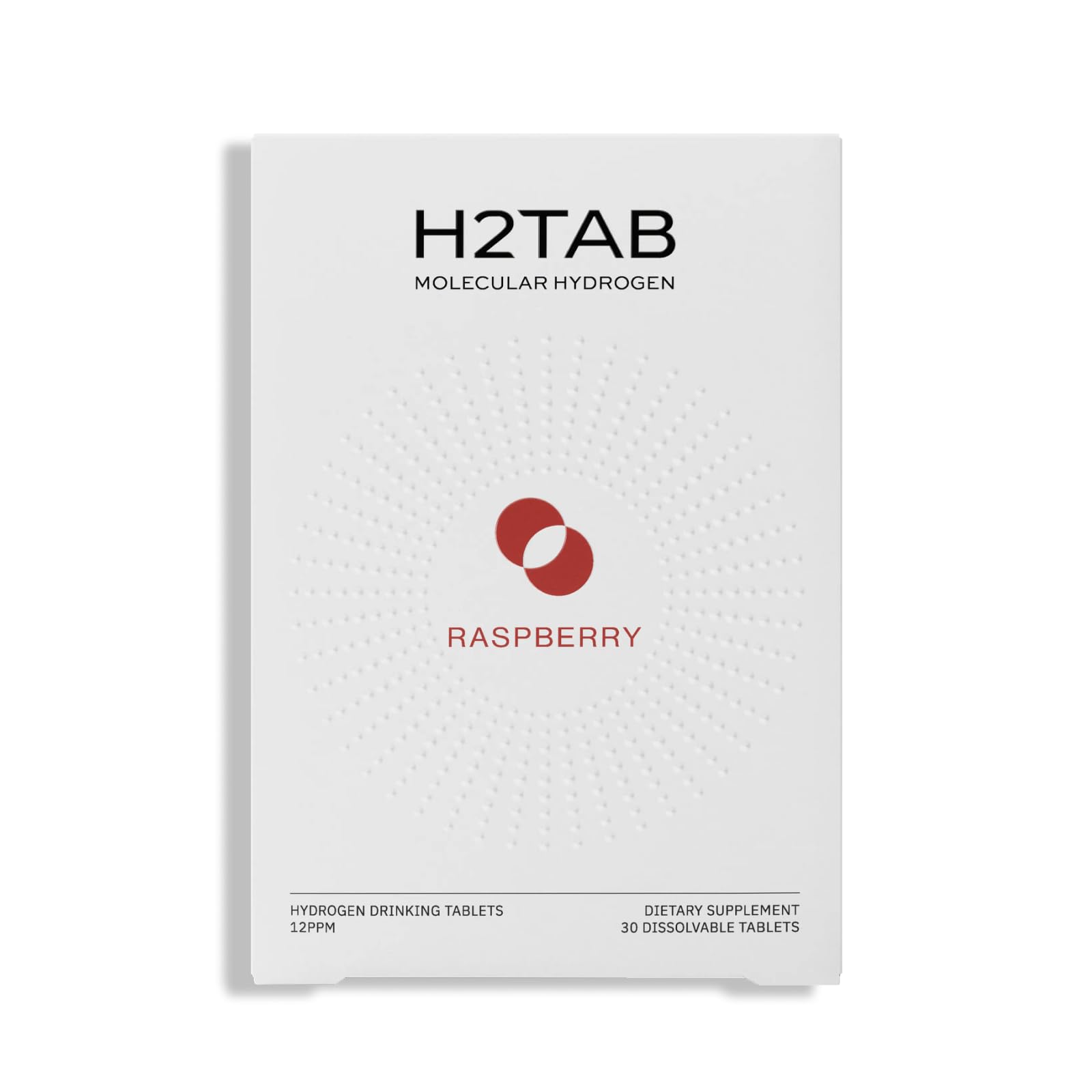
Gary Brecka promotes H2Tab molecular hydrogen tablets, a brand founded by his son Cole Brecka and business partner Megan Barrett. His own website’s disclosure says Ultimate Human LLC or he holds an economic interest in, or receives compensation from, certain third-party products it promotes, without naming which, and that statements about them may be considered promotional. H2Tab is listed on his partners page. The tablets work as advertised chemically — magnesium reacting with water releases hydrogen. Whether that produces the benefits he describes is a separate question the research has not settled.
Best for: buyers who want the convenience of a tablet and are comfortable evaluating a promoter’s disclosed commercial interest for themselves.
Pricing varies; check current price on Amazon for accurate figures.
Key Takeaways
- The tablet Gary Brecka promotes is H2Tab, listed on his own site as an official partner product.
- H2Tab was founded by Cole Brecka, his son, with Megan Barrett.
- Brecka’s own website states that he or Ultimate Human may hold an economic interest in certain products it promotes, without naming which, and that statements may be considered promotional.
- He promotes hydrogen products across at least three brands — H2Tab tablets, the Echo Flask bottle, and Lumati.
- The advertised 12 PPM is a manufacturer claim that needs its test conditions; HWS has not measured what stays dissolved in your glass.
- Hydrogen Water Safety has not lab-tested this product.
H2Tab Pros and Cons
✓ Pros
- ✓No device, charging or cleaning required
- ✓Genuinely portable
- ✓Three flavour options including unflavoured
- ✓Directions reflect the chemistry accurately
- ✓Bath tablet variant available separately
- ✓Founded by specialists in this format, not a general supplement brand
✗ Cons
- ✗Hydrogen Water Safety has not lab-tested this product
- ✗NSF Certified for Sport listing covers banned-substance screening, not hydrogen output; HWS has not confirmed which variant the Amazon listing is
- ✗The 12 PPM figure is a manufacturer claim; HWS has not measured what the tablet delivers
- ✗Endorsement comes from a promoter whose site discloses a general interest in certain products (none named), and the brand was co-founded by his son
- ✗Ongoing per-serving cost rather than a one-time device purchase
- ✗Magnesium content not clearly published, making cumulative intake hard to calculate
Which Hydrogen Tablets Does Gary Brecka Recommend?
H2Tab. His website, The Ultimate Human, lists H2Tab Molecular Hydrogen Tablets on its partners page, describing them as effervescent tablets that dissolve in water to release molecular hydrogen gas. If you have searched for Gary Brecka hydrogen water tablets, this is the product those searches lead to.
The connection runs deeper than an endorsement. H2Tab was founded by Cole Brecka — Gary Brecka’s son — alongside Megan Barrett. The company positions itself as the first dedicated exclusively to hydrogen tablets.
That family relationship is a documented fact rather than an accusation, and it is worth knowing before you buy. A product recommended by someone with a family stake in it is not automatically a worse product. It is simply a recommendation made from inside the business rather than outside it.
What his own site discloses
The Ultimate Human publishes a disclosure on its product pages. In substance: Gary Brecka owns Ultimate Human LLC, which promotes certain third-party products, none named in the disclosure, in which he or the company holds a direct or indirect economic interest, or from which he receives compensation. It goes on to state that statements made by him and others — including on the podcast — may accordingly be considered promotional in nature.
That is his own published position, in his own words, on his own website. It answers the question most buyers are actually asking, and it does so more clearly than any outside commentary could.
Two practical consequences. First, when you hear him describe hydrogen water on the podcast, treat it as promotional content — because that is how his own disclosure frames it. Second, the disclosure does not mean the products are bad. It means the recommendation is not independent, and you should evaluate the product on its specifications rather than on the endorsement.
He Promotes More Than One Hydrogen Brand
This is the part most coverage misses. Brecka’s hydrogen recommendations span several separate companies.
H2Tab — the tablets, co-founded by his son. Echo — he previously promoted the Echo Go+ bottle and has since moved to the Echo Flask, its successor; we cover that separately in our review of the bottle he uses. Lumati — a hydrogen company whose advisory board he joined in 2025, covering bottles, inhalation devices and immersion systems.
Each relationship is disclosed on his site. But the pattern matters for how you read his content: he is not comparing hydrogen products and selecting winners. He is promoting several brands he is connected to, across bottles, tablets and devices.
There is no published evidence that he has independently tested competing hydrogen tablets and selected H2Tab as the best. You will not find a side-by-side comparison from him. That is not a criticism of the product — it is a description of what the endorsement is and is not. If you want a comparison built on published specifications rather than endorsements, that is what our hydrogen water tablets guide is for.
Two further items sit alongside the tablets on his shop. H2Tab hydrogen bath tablets, listed as effervescent tablets that release molecular hydrogen into bath water — a use resting on a far thinner literature than drinking; see what the hydrogen bath studies actually say. And, added in 2026, the Ultimate Human Water Hydro+ Home Drinking System, an under-sink reverse-osmosis unit whose listing describes 22-stage filtration, 75 gallons per day of output and molecular hydrogen infusion certified by H2 Analytics. It is a water-treatment appliance first and a hydrogen source second; we have not reviewed it, and the closest category on this site is hydrogen water generators. Each is a separate purchase with a separate evidence base — judge each on its own label, not on the routine as a whole.
H2Tab Specifications
The figures below come from H2Tab’s published materials and retail listings. Hydrogen Water Safety has not measured this product. Specifications change, so confirm the current listing before ordering.
| Spec | Manufacturer Claim |
|---|---|
| Stated hydrogen concentration | 12 PPM |
| Tablets per package | 30 |
| Flavour options | Unflavoured, raspberry, lemon-lime |
| Directions | One tablet in 12–16 oz of water, drink once dissolved |
| Key ingredients | Magnesium; natural acids from apples, grapes and sugar beets; non-GMO dextrose |
| Third-party certification | NSF Certified for Sport listing for the Unflavored and Raspberry variants (banned-substance screening, not hydrogen output); HWS has not confirmed which variant the Amazon listing is |
| Other formats | Hydrogen bath tablets available separately |
| Price | Pricing varies; check current price on Amazon |
The 12 PPM figure deserves scrutiny, and the next section gives it.
What 12 PPM Actually Describes
Every hydrogen tablet on the market advertises a concentration figure, and buyers reasonably assume it describes what ends up in the glass. It does not.
Magnesium reacts with water to produce magnesium hydroxide and hydrogen gas. The organic acids in the tablet drive that reaction. A tablet containing a given quantity of magnesium can generate a calculable quantity of hydrogen — and manufacturers publish that figure.
Here is the complication. At ordinary pressure, water holds roughly 1.6 mg/L of dissolved hydrogen at equilibrium. A freshly reacting tablet can briefly exceed that figure, and a historical lab report on a different brand’s tablet (reviewed on our Drink HRW page) measured well above it in uncovered water, so the equilibrium figure is not a ceiling for a fresh reaction. HWS has not measured what this tablet delivers.
So a tablet advertised at 12 PPM is making a manufacturer claim that needs its test context. How much stays dissolved depends on water volume, temperature, time and method, and HWS has not measured it for this tablet. Visible fizzing is not a meter.
This is not specific to H2Tab. Magnesium tablet directions typically say to use an open container and drink promptly. That is consistent with the chemistry, since an open vessel cannot hold pressure, and drinking promptly is sensible. HWS has not measured how quickly dissolved hydrogen falls after a tablet finishes reacting.
What this means when you compare brands: advertised concentration is a manufacturer claim whose test conditions vary by brand, so it is not directly comparable across tablets. More useful comparison criteria are magnesium content, cost per serving, whether third-party testing is published, and whether the instructions match the chemistry. On that last point, H2Tab’s directions are specific about volume and timing. On third-party certification, H2Tab cites an NSF Certified for Sport listing, which covers banned-substance screening rather than hydrogen output; Drink HRW cites output certification from H2 Analytics. For the same principle applied to devices, see why headline output figures overstate what you drink.
How Much Magnesium the 12 PPM Claim Implies
H2Tab does not publish magnesium per tablet in its written ingredient list, but the figure can be bounded from the label’s own numbers, because the chemistry is fixed. One magnesium atom yields one hydrogen molecule: Mg + 2H2O → Mg(OH)2 + H2. To generate the advertised 12 mg of hydrogen per litre in the stated 12–16 oz glass, the tablet must contain at least the following magnesium — a floor, assuming every atom reacts.
| Step | 12 oz glass (355 mL) | 16 oz glass (473 mL) |
|---|---|---|
| Hydrogen generated at 12 mg/L | 4.3 mg | 5.7 mg |
| Moles of H2 (÷ 2.016 g/mol) | 2.1 mmol | 2.8 mmol |
| Magnesium required (× 24.305 g/mol) | ≈ 51 mg per tablet | ≈ 68 mg per tablet |
| At the label’s “increase to 2–3 tablets as needed” | 103–154 mg/day | 137–205 mg/day |
| Share of the 350 mg/day supplemental upper limit | 29–44% | 39–59% |
So the label’s own directions, taken to their stated maximum of three tablets, commit a daily user to somewhere between a third and three-fifths of the supplemental magnesium ceiling before any other supplement, antacid or fortified food is counted — and that is the floor. The number a buyer actually needs is on the supplement panel, not on the web page. Read it before deciding on “2–3 as needed.”
The same arithmetic shows why 12 ppm needs its test context. Water at room temperature and normal pressure holds roughly 1.6 mg of hydrogen per litre at equilibrium, so a 16 oz glass holds about 0.76 mg at that level. A 12 mg/L claim in the same glass implies about 5.7 mg, roughly seven and a half times as much. Whether a fresh reaction briefly holds more than equilibrium depends on conditions HWS has not measured, which is one reason directions say to drink promptly.
What Brecka Claims, and What Research Supports
Brecka’s central claim about molecular hydrogen is that it acts as a selective antioxidant — neutralising harmful free radicals while leaving beneficial ones alone. He describes this as supported by a large body of peer-reviewed research.
The selective antioxidant hypothesis is a real one in the published literature, not something invented for marketing. Studies have examined molecular hydrogen’s effects on oxidative stress markers, exercise recovery and various metabolic measures.
What matters for a buyer is the shape of that evidence rather than its volume. Human trials in this area are generally small, generally short, and often use concentrations and delivery methods that differ from a consumer tablet. A large count of published papers includes animal studies, cell-culture work and review articles alongside human trials — so the headline number describes research activity, not settled conclusions.
Two distinctions worth holding onto. Category research is not product evidence: studies on molecular hydrogen generally are not evidence about H2Tab specifically, even though the compound is the same. And mechanism is not outcome: that hydrogen behaves a certain way in a laboratory does not establish what drinking hydrogen-rich water does for a person over months. That gap is where most wellness marketing lives, across every brand in this category.
Academic and science-communication outlets have examined these claims critically, and their assessments are worth reading alongside the promotional material. We cover his health claims against the peer-reviewed evidence in more depth in our review of the bottle he uses, and set out what the safety research covers in our hydrogen water safety overview.
The study most often attached to the anti-ageing claim can be named. According to McGill University’s Office for Science and Society, Brecka told Joe Rogan about a trial in which older adults drank hydrogen-rich water and their telomeres lengthened, calling it “the greatest biohack on Earth.” That trial is Zanini and colleagues, Experimental Gerontology, 2021: a randomised controlled pilot in 40 adults aged 70 and over who drank half a litre a day of 15 ppm hydrogen water for six months. Mean telomere length rose about 4%, with the between-group difference at P = 0.049 — just inside the conventional threshold — and most other measured outcomes showed no significant difference. McGill’s Jonathan Jarry reports the trial was funded in part by a company that sells hydrogen-rich water; that attribution is his. One further documented fact: the trial’s senior author, Sergej Ostojić, is listed on H2Tab’s own product page among the experts the brand presents as the science behind it. Two public pages, one named scientist, stated as fact and not as an allegation.
How H2Tab Compares to Other Hydrogen Water Tablets
Endorsements aside, the practical question is how H2Tab measures up against the tablets it competes with. All three below are magnesium-based effervescent tablets using the same underlying chemistry, so the differences come down to what each company publishes and what you get per tube.
| Criterion | H2Tab | Drink HRW Rejuvenation | PHM |
|---|---|---|---|
| Tablets per package | 30 | 30 or 60 | 90 |
| Stated concentration | 12 PPM | Up to 12.4 PPM per 500 ml | Per label |
| Third-party certification published | NSF Certified for Sport listing (banned-substance screening, not output) | H2 Analytics of the IHSA; GMP | Not published |
| Magnesium per tablet stated | Not clearly published | 80 mg | Per label |
| Flavour options | Unflavoured, raspberry, lemon-lime | Unflavoured, raspberry | Unflavoured |
| Price | Pricing varies; check current price on Amazon | Pricing varies; check current price on Amazon | Pricing varies; check current price on Amazon |
Stated concentration figures are manufacturer claims with different or unpublished test conditions, so they are not directly comparable across tablets.
Two differences stand out. Drink HRW cites output certification from H2 Analytics and a clear magnesium figure; H2Tab cites an NSF Certified for Sport listing (banned-substance screening, not output) and no clear magnesium figure. In a category where anyone can print a number on a tube, an outside body verifying that the tablet produces hydrogen is the one claim that has been checked by someone other than the seller.
Against that, H2Tab offers the widest flavour range of the three, and PHM offers by far the longest supply per tube. If you want documentation, Drink HRW is the stronger choice. If you want flavour options, H2Tab is. If you want the lowest reorder frequency, PHM is. Full breakdowns are in our hydrogen water tablets guide.
Found this helpful?
Check the current price on Amazon to see how H2TAB compares on cost per serving.
Is H2Tab Safe?
The variable worth watching with any magnesium hydrogen tablet is magnesium, not hydrogen.
Dissolved hydrogen in drinking water at these concentrations is not a recognised safety concern, and the quantities are small. Magnesium is a different matter — it accumulates, it interacts with medication, and it is cleared by the kidneys.
H2Tab does not clearly publish its magnesium content per tablet, which is a genuine gap. Competing brands do. Without it you cannot calculate your cumulative daily intake, and cumulative intake is the number that matters when you are taking something every day alongside food and other supplements.
Established guidance sets the upper intake level for supplemental magnesium — from supplements rather than food — at 350 mg per day for adults. If you are taking a magnesium hydrogen tablet daily, you want to know how much of that allowance it uses.
Check with a clinician before regular use if you have kidney disease or a history of kidney stones, take medication with a narrow therapeutic window, are pregnant or nursing, or manage a chronic condition. Magnesium is cleared renally, which is why kidney function is the specific concern. For the category-wide view, see the magnesium question with hydrogen tablets.
Who Should Buy These, and Who Should Skip Them
Good fit if
- You want hydrogen water without owning, charging or cleaning a device
- You travel or need something portable
- You want flavour options, since not every brand offers them
- You follow The Ultimate Human content and want the product discussed there, with the disclosure in mind
Consider alternatives if
- You want published third-party verification of hydrogen output — H2Tab’s cited NSF listing covers banned-substance screening, not output, while Drink HRW cites H2 Analytics
- You want a clearly stated magnesium figure so you can track daily intake
- Cost per serving is your main constraint; competing tablets offer longer supplies
Skip entirely if
- You want independently verified delivered-hydrogen figures, for this exact product, which this review has not found published
- You are managing magnesium intake on clinical advice
- You expect a reliable, noticeable effect — buyer reports on outcomes vary widely across every brand in this category
Frequently Asked Questions
Which hydrogen tablets does Gary Brecka recommend?
H2Tab. His site, The Ultimate Human, lists them as a partner product. The brand was founded by his son Cole Brecka with Megan Barrett, and his site’s disclosure says he or Ultimate Human may hold an economic interest in certain promoted products, without naming which.
Is Gary Brecka a doctor?
He describes himself as a human biologist and holds bachelor’s degrees in biology and human biology. He is the co-founder of 10X Health System and hosts The Ultimate Human podcast. He is not a licensed physician, and his site’s disclaimer states the content is not medical advice.
Do H2Tab hydrogen tablets actually work?
Chemically, yes — magnesium reacting with water releases hydrogen, and that is well established. Whether drinking hydrogen-rich water produces the health outcomes described in the marketing is a separate question, and the human research is small-scale and preliminary.
Does H2Tab reach 12 PPM of hydrogen?
That is the manufacturer’s claim, and HWS has not measured it. Water at ordinary pressure holds roughly 1.6 mg/L of dissolved hydrogen at equilibrium, so a 12 ppm figure needs its test conditions (water volume, temperature, timing and method) before it can be read as what is in the glass.
How much magnesium is in each H2Tab tablet?
H2Tab does not clearly publish this figure, which is a genuine limitation. Check the supplement facts panel on the packaging before daily use, particularly if you take other magnesium supplements or have kidney concerns.
Does Gary Brecka make money from H2Tab?
His site discloses that Ultimate Human LLC or Brecka holds a direct or indirect economic interest in, or receives compensation from, certain products promoted on the platform, without naming which. H2Tab is listed as a partner product and was co-founded by his son.
Are hydrogen tablets better than a hydrogen water bottle?
They solve the same problem differently — no device, no charging, but an ongoing per-serving cost. See our tablets and bottles comparison for the full breakdown.
The Bottom Line
H2Tab is the tablet Gary Brecka promotes, and the relationship is closer than a typical endorsement — his son co-founded the company, and his own website discloses an economic interest in certain products it promotes, without naming which.
None of that makes the tablets bad. The chemistry is sound, the format is genuinely convenient, and the directions match the physics better than a lot of competing marketing does. What it means is that the endorsement is not independent, and the product should be judged on its published specifications rather than on who recommends it.
On specifications, two things stand out. H2Tab’s cited NSF Certified for Sport listing covers banned-substance screening rather than hydrogen output, and it publishes no output verification. And it does not clearly publish magnesium per tablet, which is the one number a daily user genuinely needs.
Hydrogen Water Safety has not lab-tested this product. Every performance figure here is manufacturer-reported or drawn from published materials, and you should confirm current label values and pricing yourself before ordering. Buy it if you want a well-made tablet from a company that specialises in the format and you are comfortable with the disclosed relationships. Look elsewhere if you want published verification of output, or a clearly stated magnesium figure to work from.
Ready to Try H2TAB?
Further reading: our hydrogen water tablets guide compares the category on published specifications, our review of the bottle Brecka uses covers his other hydrogen recommendation, our hydrogen water safety overview sets out the research background, and our evaluation method explains exactly what we verify and what we do not. Browse all of our hydrogen water reviews.
Last update on 2026-10-23 / Affiliate links / Images from Amazon Product Advertising API
This product presentation was made with AAWP plugin.